
How to Perform a Web Page SEO Analysis to Improve Rankings and Organic Traffic?

If your website isn't getting the rankings or organic traffic you expected, publishing great content alone may not be enough. Search engines evaluate hundreds of signals to determine whether a page deserves to rank, which is why performing a Web Page SEO Analysis is one of the most effective ways to uncover hidden opportunities and improve search performance.
More than 68% of all online experiences begin with a search engine, making organic search one of the most valuable channels for attracting qualified website visitors. Yet, 96.55% of web pages receive no organic traffic from Google, often because they fail to meet search intent, lack optimization, or have unresolved SEO issues.
The opportunity is significant. Research by Backlinko analyzed 4 million Google search results and found that the #1 organic result receives an average CTR of 27.6%, while the top three results capture more than half of all organic clicks. Even moving up a single position can significantly improve click-through rates, making continuous page analysis one of the highest-impact SEO activities.
In this guide, you'll learn how to perform a Web Page SEO Analysis step by step, identify the factors affecting your rankings, evaluate your page using proven SEO techniques, and create an actionable plan to increase organic traffic and long-term search visibility.
Key Takeaways:
- Understand the most important factors that impact your website's SEO performance.
- Learn how to identify technical, content, and on-page issues affecting rankings.
- Discover practical optimization opportunities to improve organic traffic.
- Prioritize SEO improvements using a structured analysis process.
- Use the right SEO tools to monitor, measure, and improve page performance.
What Is a Web Page SEO Analysis?
A Web Page SEO Analysis is the process of evaluating how well an individual web page is optimized to rank in search engines and satisfy user intent. Instead of looking at your entire website, it focuses on a single page to identify the factors that influence its visibility, organic traffic, user experience, and overall search performance.
Unlike a basic SEO review, a comprehensive web page analysis examines multiple ranking signals together. These include keyword relevance, content quality, search intent alignment, metadata, heading structure, internal linking, page experience, Core Web Vitals, crawlability, indexability, structured data, and competitor performance. Analyzing these elements helps you understand why a page is performing well or why it isn't.
Google recommends creating helpful, reliable, and people-first content while ensuring pages are easy to crawl, understand, and index. Regularly analyzing individual pages allows you to identify optimization opportunities, resolve issues before they affect rankings, and measure the impact of SEO improvements using tools like Google Search Console and Google Analytics. These practices align with Google's official Search Essentials and SEO Starter Guide.
A Simple Example:
Imagine you've published a blog post that ranks on the second page of Google for your target keyword. Although the content is informative, it receives very few clicks and almost no organic traffic.
A Web Page SEO Analysis helps you identify the reasons behind this performance by answering questions such as:
- Is the page matching the user's search intent?
- Are the target keywords used naturally throughout the content?
- Is the title and meta description compelling enough to improve CTR?
- Does the page provide more value than competing results?
- Are there technical or user experience issues affecting performance?
- Is the page supported by relevant internal links and structured data?
Instead of making random changes, you can prioritize improvements based on real data, increasing the likelihood of achieving higher rankings and attracting more qualified visitors.
In simple terms: A Web Page SEO Analysis is like a complete health check-up for a single web page. It identifies what's working, uncovers what's limiting performance, and provides a clear roadmap to improve rankings, organic traffic, and user experience.
How to Prepare Before Starting a Web Page SEO Analysis
Before you begin a webpage SEO analysis, it's important to lay the right foundation. Jumping straight into optimization without understanding your page's current performance, objectives, or target audience often leads to wasted effort and missed opportunities.
Preparation helps you focus on the changes that will have the greatest impact on organic traffic, search visibility, and overall SEO performance. Instead of making assumptions, you'll be working with real data, clear goals, and a structured plan.
Whether you're analyzing a blog post, landing page, product page, or service page, taking a few minutes to prepare ensures your analysis is more accurate, efficient, and aligned with your broader website optimization strategy.
According to Google's SEO guidance, website owners should regularly monitor how their pages perform in search, understand what users are looking for, and use performance data to identify opportunities for improvement instead of relying on guesswork. Regular analysis also makes it easier to measure the impact of future SEO improvements and prioritize the changes that matter most. The following preparation steps will help you organize the information you need before evaluating your page in detail.
Define Your SEO Goal and Select the Right Web Page
Before performing a Web Page SEO Analysis, you need a clear understanding of why you're analyzing the page in the first place. Every webpage serves a different purpose, so your optimization strategy should support its specific objective rather than follow a one-size-fits-all approach.
Start by selecting one page instead of trying to analyze your entire website at once. Focusing on a single page allows you to identify issues more accurately, measure improvements over time, and prioritize changes that can deliver measurable results.
The best pages to analyze are those that already have growth potential, such as:
- Pages ranking on Google's second page (positions 11–20)
- High-impression pages with a low click-through rate (CTR)
- Pages that have experienced a decline in organic traffic
- Important service or product pages that generate leads
- High-value blog posts that no longer attract consistent traffic
After choosing your page, define a measurable SEO goal. Rather than aiming to "rank higher," establish a target that you can track over time.
Examples include:
- Increase organic traffic by 20%
- Improve a primary keyword from Position 15 to the Top 10
- Increase CTR from 2.8% to 4%
- Generate more qualified leads from organic search
- Improve overall SEO performance and search visibility
Having a clearly defined objective makes it easier to evaluate whether your SEO improvements are delivering real business results instead of simply increasing rankings. Focus on improving one high-value page at a time. A structured approach is more effective than making small changes across dozens of pages without a clear goal.
Collect Essential SEO Performance Data Before You Begin
Once you've selected the page, gather its current performance data before making any changes. This gives you a reliable baseline and helps you measure the impact of your optimization efforts later.
Without benchmark data, it's difficult to know whether your changes actually improved search engine rankings, increased organic traffic, or enhanced overall website optimization.
The most valuable performance metrics include:
- Organic clicks
- Impressions
- Average keyword position
- Click-through rate (CTR)
- Organic sessions
- Bounce or engagement metrics
- Conversion rate
- Top-performing search queries
Most of this information can be collected using Google Search Console and Google Analytics 4, two free tools from Google that provide valuable insights into how users discover and interact with your pages.
If you're managing multiple pages or client projects, creating an SEO report for my website before making changes can help you document your starting point and compare results after optimization. This approach also makes it easier to communicate progress with clients or stakeholders.
Remember, successful SEO decisions should always be based on data rather than assumptions.
Identify Your Target Keywords and Understand Search Intent
Every successful webpage is built around a primary keyword and a clear understanding of what users expect to find.
Before analyzing the page, identify:
- One primary keyword
- Supporting keywords
- Related semantic keywords
- Questions your audience is asking
- The search intent behind those queries
This ensures your page is optimized for the topics users actually search for instead of simply repeating keywords throughout the content.
A reliable website keyword analyzer tool can help uncover keyword variations, related search terms, and optimization opportunities that may be difficult to identify manually. These insights allow you to create content that is more comprehensive, relevant, and aligned with modern Google ranking factors.
It's equally important to understand the intent behind each keyword.
Ask yourself:
- Is the user looking for information?
- Are they comparing different solutions?
- Do they want to purchase a product or service?
- Are they trying to solve a specific problem?
When your content matches user intent, visitors are more likely to stay on the page, engage with your content, and complete the desired action. Search engines also use these engagement signals to better understand whether your page satisfies users' needs.
Best Practice: Optimize each page around one primary topic while naturally incorporating supporting keywords where they enhance the content. This improves relevance without creating keyword stuffing or internal competition.
Review Your Top Competitors to Set Performance Benchmarks
Before starting your analysis, understand why competing pages are already ranking well.
Your competitors provide valuable insights into what Google considers helpful for a particular search query. Studying them helps you identify opportunities to create more useful, comprehensive, and user-focused content.
Pay attention to factors such as:
- Content structure
- Heading hierarchy
- Content freshness
- Use of visuals
- Internal linking
- Topical coverage
- User experience
- Frequently asked questions
- Search intent alignment
Rather than copying competitors, look for areas where you can provide additional value. You might answer unanswered questions, explain concepts more clearly, include original examples, or improve readability.
The goal is to create the most helpful resource for users, not simply the longest article.
Once you've completed these preparation steps, you'll have everything needed to begin a structured Web Page SEO Analysis using real performance data, clearly defined objectives, relevant keywords, and competitive insights. From there, you can confidently evaluate each SEO element and prioritize the improvements that will have the greatest impact on your organic traffic and search engine rankings.
Top 10 Step-by-Step Process to Perform a Web Page SEO Analysis
Once you've completed the preparation phase, it's time to evaluate your webpage systematically. A successful Web Page SEO Analysis isn't about checking a few SEO elements or making random optimizations; it's about understanding why a page performs the way it does and identifying the improvements that will have the greatest impact on its visibility in search results.
Many website owners focus on isolated SEO tasks, such as updating a title tag, adding more keywords, or publishing additional content. While these changes may help in some cases, they rarely solve the underlying issues that prevent a page from ranking well. Without a structured evaluation process, it's easy to overlook important factors that influence organic traffic, search engine rankings, and the overall user experience.
A comprehensive analysis looks at your webpage from multiple perspectives. It starts by understanding how the page is currently performing, then examines keyword opportunities, search intent, content quality, On-Page SEO, internal linking, Technical SEO, page experience, and competitive positioning. Each area contributes to the overall performance of the page, and together they provide a complete picture of what needs improvement.
Rather than trying to fix everything immediately, think of this process as performing a health check on your webpage. The goal is to identify strengths, uncover hidden issues, prioritize the highest-impact improvements, and build a roadmap that supports long-term website optimization and sustainable SEO growth.
Google also recommends monitoring your website regularly, understanding how pages perform in Search, and making improvements based on real performance data instead of assumptions. Consistently reviewing your pages helps you adapt to changing user behavior, content quality expectations, and search ranking systems over time.
In the following sections, you'll learn a practical 10-step framework that can be applied to almost any type of webpage, including blog posts, service pages, landing pages, product pages, and category pages. Whether you're performing an SEO review for your own website or preparing an SEO report for your website for a client, these steps will help you identify opportunities, prioritize improvements, and make confident, data-driven SEO decisions.
Example: Imagine your service page receives 5,200 monthly impressions but only 110 clicks, while its primary keyword ranks around Position 12. Instead of immediately rewriting the content, this framework helps you identify why the page isn't reaching the first page of Google. You may discover that the content doesn't fully satisfy search intent, the page has weak internal links, its Core Web Vitals need improvement, and competitors provide more comprehensive information. Addressing these issues strategically is far more effective than making random SEO changes, and that's exactly what the next 10 steps will guide you through.
Step #1: Analyze Organic Performance Data
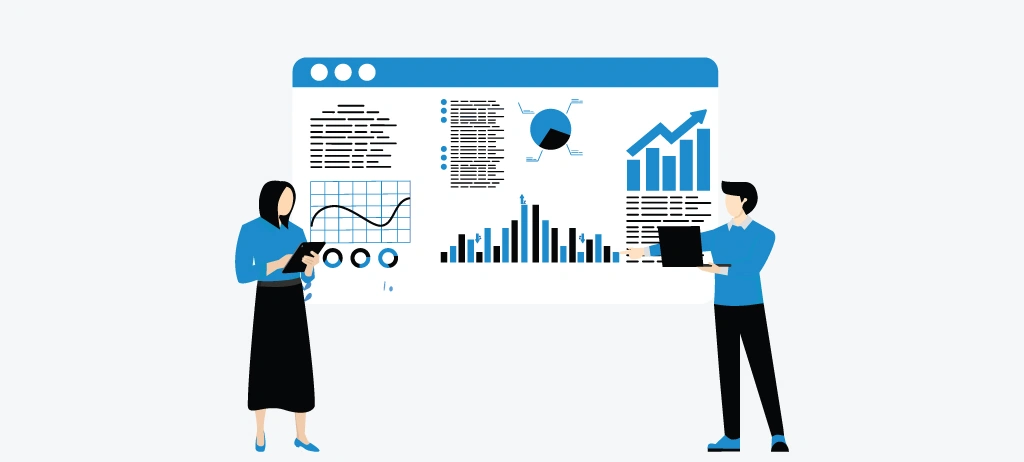
Before changing a single heading, rewriting content, or fixing technical issues, you need to understand how your webpage is currently performing in Google Search. This provides the baseline for your entire Web Page SEO Analysis and helps ensure every optimization is backed by real performance data rather than assumptions.
Many website owners start making SEO changes without knowing whether the page is already gaining visibility, attracting qualified visitors, or gradually improving its rankings. As a result, they often spend time fixing the wrong issues while overlooking the changes that could have the greatest impact on organic traffic and SEO performance.
This is why the first step should always be to evaluate your page's organic search performance.
Google Search Console is one of the most reliable sources for this information because it shows how users discover your page in Google Search before they even visit your website. When combined with Google Analytics 4, it also helps you understand what users do after they arrive, giving you a complete picture of your page's search visibility and engagement.
Instead of looking at a single metric, evaluate the overall performance by reviewing the following key indicators.
What Key Metrics Should You Analyze?
1: Organic Clicks: Organic clicks show how many users visited your page after clicking on your listing in Google's organic search results.
A growing number of clicks usually indicates that your page is becoming more visible and attracting users. If clicks remain low despite high impressions, it often suggests that your title tag or meta description isn't compelling enough to earn more clicks.
2: Impressions: Impressions represent the number of times your webpage appeared in Google Search results, regardless of whether someone clicked on it.
High impressions are generally a positive sign because they indicate that Google recognizes your page as relevant for one or more search queries. However, impressions without corresponding clicks often reveal opportunities to improve your page's search snippet or better match user intent.
3: Average Position: Average position tells you where your page typically ranks for the queries generating impressions.
While ranking in the top three positions usually attracts the highest share of clicks, pages appearing between positions 11 and 20 often present the quickest SEO opportunities. These pages already have visibility but usually require targeted SEO improvements rather than a complete content overhaul.
Instead of focusing on your overall average position, review the rankings of your most important keywords individually to identify where optimization efforts will have the greatest impact.
4: Click-Through Rate (CTR): CTR measures the percentage of users who clicked on your page after seeing it in search results.
A low CTR with strong rankings often points to issues such as:
- Unattractive meta titles
- Weak meta descriptions
- Poor alignment with search intent
- Uncompetitive SERP snippets
- Missing structured data that could improve visibility
Improving your CTR allows you to generate more traffic without necessarily increasing your rankings, making it one of the most efficient opportunities during a Web Page SEO Analysis.
5: Organic Traffic Trends: Don't rely on a single day's performance. Review your page's organic traffic over the last 3 to 6 months to identify whether visibility is:
- Increasing steadily
- Remaining stable
- Gradually declining
- Experiencing sudden drops
A gradual decline may indicate outdated content, stronger competitors, or changing search intent, while a sudden drop could signal technical issues, indexing problems, or the impact of a Google algorithm update.
Looking at trends instead of isolated numbers helps you make more informed optimization decisions.
6: User Engagement Metrics: After understanding how users find your page, evaluate what they do once they arrive.
Using Google Analytics 4, review engagement metrics such as:
- Engaged sessions
- Average engagement time
- Conversions
- Key events
- Landing page performance
Strong rankings mean little if visitors leave immediately without interacting with your content. These metrics help determine whether your page satisfies user expectations after the click.
What Questions to Ask Before Moving to the Next Step?
Once you've reviewed the data, ask yourself:
- Is the page gaining or losing organic visibility?
- Which search queries drive the most traffic?
- Does the page have high impressions but a low CTR?
- Are rankings improving or declining over time?
- Which keywords are closest to reaching the first page?
- Are visitors engaging with the content after landing on the page?
- Which metrics should become the priority for optimization?
Answering these questions helps transform raw data into actionable insights, making it much easier to prioritize the right SEO improvements.
Example: Imagine your blog post receives 12,500 monthly impressions, 240 organic clicks, an average CTR of 1.9%, and ranks around Position 11.4 for its primary keyword. At first glance, the page may seem underperforming, but the data tells a different story. Google is already showing the page frequently, meaning visibility isn't the main issue. The bigger opportunity lies in improving the title tag, refining the meta description, strengthening search intent alignment, and enhancing the content to help the page move into the top 10 results. Small, targeted improvements could significantly increase traffic without creating a completely new page.
Step #2: Evaluate Keyword Ranking Opportunities

After analyzing your page's organic performance, the next step is to identify which keywords offer the greatest opportunity for growth. Every webpage ranks for multiple search queries, but not all of them deserve the same level of attention. A successful Web Page SEO Analysis focuses on keywords that can deliver meaningful traffic improvements with realistic optimization efforts.
One of the biggest SEO mistakes is chasing highly competitive keywords while ignoring the terms that are already within reach. In many cases, your page is only a few positions away from significantly increasing its visibility. These "quick-win" opportunities often require refining existing content rather than creating new pages.
Start by reviewing the keywords your page already ranks for in Google Search Console, your preferred rank tracking platform, or a reliable website keyword analyzer tool. Instead of looking only at your primary keyword, analyze the complete keyword profile to understand how Google interprets your content and where additional optimization opportunities exist.
Why Identify Your Highest-Potential Keywords?
When reviewing keyword data, prioritize opportunities that have the greatest potential to improve organic traffic and search engine rankings.
Look for keywords that:
- Rank between positions 8 and 20, where targeted optimization can often move them onto the first page.
- Generate high impressions but relatively few clicks.
- Have a declining ranking trend over recent months.
- Are closely related to your primary topic and strengthen your page's topical relevance.
- Support your business goals by attracting qualified visitors rather than just higher traffic.
These keywords already have search visibility, making them far more valuable than starting from scratch with completely new terms.
How to Analyze Keyword Performance Instead of Rankings Alone
A keyword's ranking tells only part of the story. To understand its true potential, evaluate multiple performance signals together.
Pay attention to:
- Average ranking position.
- Monthly impressions.
- Organic clicks.
- Click-through rate (CTR).
- Ranking trend over time.
- The landing page associated with the keyword.
For example, a keyword ranking in Position 10 with thousands of impressions may offer a much greater growth opportunity than a keyword ranking in Position 25 with very little search demand. Looking at these metrics together helps you prioritize optimization efforts where they'll have the greatest impact.
Find Supporting Keywords to Strengthen Topical Coverage
Google no longer evaluates pages based solely on one exact-match keyword. It also considers whether your content comprehensively covers the topic.
As part of your analysis, identify relevant supporting keywords and naturally incorporate them where they improve the content. These may include related questions, industry terminology, long-tail variations, and closely connected concepts that users expect to see.
Expanding your keyword coverage helps search engines better understand the page while increasing the likelihood of ranking for a wider range of relevant searches. This approach also supports stronger website optimization without relying on keyword stuffing.
Why You Should Avoid Keyword Cannibalization
Before optimizing a keyword further, confirm that only one primary page on your website is targeting that topic.
If multiple pages compete for the same keyword, Google may struggle to determine which page should rank, reducing the visibility of all competing URLs. This issue, commonly known as keyword cannibalization, can limit your overall SEO performance.
If you discover multiple pages targeting the same search query, consider consolidating overlapping content, improving internal linking, or assigning each page a more distinct keyword focus instead of creating additional competition.
How to Prioritize Opportunities Based on Business Value?
Not every keyword deserves equal attention. A keyword with moderate search volume but strong commercial intent may deliver more qualified leads than a broad, high-volume informational term.
When prioritizing your optimization efforts, ask yourself:
- Does this keyword align with the page's purpose?
- Will it attract the right audience?
- Can it generate leads, conversions, or meaningful engagement?
- Does it support my overall content strategy?
Focusing on business value ensures your SEO efforts contribute to measurable outcomes rather than vanity metrics.
Example: Suppose your page targets "web page SEO analysis", but Google Search Console shows it's also ranking for related queries such as "website SEO audit checker," "seo report for my website," and "website keyword analyzer tool." The primary keyword sits at Position 9, while the supporting keywords rank between Positions 12 and 18 with strong impressions. Instead of creating separate articles for each term, you can strengthen the existing page by naturally expanding relevant sections, answering additional user questions, and improving topical coverage. This allows one comprehensive page to rank for multiple closely related searches while avoiding keyword cannibalization.
Why does this step matter?
Keyword evaluation isn't about finding the highest-volume search term; it's about discovering the best ranking opportunities that align with your page's purpose and your users' needs. By understanding which keywords are already performing, which ones have room to grow, and how they contribute to your overall topic, you'll build a stronger foundation for the next step: analyzing whether your content truly satisfies the search intent behind those queries.
Step #3: Analyze Search Intent Alignment

Ranking for the right keywords doesn't guarantee higher organic traffic if your content doesn't satisfy what users actually expect to find. That's why analyzing search intent alignment is one of the most important steps in a Web Page SEO Analysis.
Google's goal is to deliver the most relevant result for every search query. When your page closely matches the user's intent, it has a much better chance of ranking higher, attracting more clicks, and keeping visitors engaged. On the other hand, even a well-optimized page can struggle if it answers a different question than the one users are trying to solve.
Rather than asking, "Did I include the target keyword?" ask yourself:
"Does my page completely solve the problem behind that keyword?"
This simple shift in thinking often makes the difference between a page that ranks on the second page of Google and one that earns a place in the top results.
How to Identify the Primary Search Intent?
Every keyword reflects a specific goal. Before optimizing your content, determine why users are searching for that query.
Most search queries fall into one of these intent categories:
- Informational: Users want to learn something or solve a problem.
- Navigational: Users are looking for a specific website or brand.
- Commercial Investigation: Users are comparing tools, products, or services before making a decision.
- Transactional: Users are ready to take action, such as signing up, purchasing, or requesting a service.
Understanding the dominant intent helps ensure your page delivers the type of content users and Google expect to see.
Why Compare Your Page With the Top-Ranking Results?
One of the fastest ways to evaluate search intent is to study the pages already ranking on the first page of Google.
Look beyond keywords and analyze patterns such as:
- What type of content ranks (guides, tools, service pages, comparison articles, or videos)?
- How comprehensive is the content?
- Which questions are consistently answered?
- What visual elements are included, such as images, tables, or checklists?
- What additional topics appear across multiple competitors?
If most top-ranking pages follow a similar structure, Google has likely identified that format as the best match for the search intent.
Your goal isn't to copy competitors; it's to understand what users consistently expect and then provide an even better experience.
Check Whether Your Content Answers the User's Questions
A page may contain the right keywords but still leave users searching for more information.
As you review your content, ask yourself:
- Does the introduction immediately address the user's problem?
- Are the most important questions answered clearly?
- Is the information current and accurate?
- Have you explained the topic in enough detail without overwhelming the reader?
- Does the page guide users toward the next logical step?
If visitors need to return to Google because your page didn't fully answer their query, it's a strong signal that the content may not satisfy search intent.
Why You Should Review SERP Features for Additional Intent Clues
Google's search results provide valuable insights into what users expect.
Pay attention to features such as:
- Featured Snippets
- People Also Ask
- AI Overviews (where available)
- Image Packs
- Video Results
- Related Searches
These elements reveal common follow-up questions and content formats that Google considers useful for the query. Incorporating relevant answers and supporting content can improve your page's topical completeness and overall search visibility.
Keep Search Intent Updated Over Time
Search intent isn't static. As industries evolve, user expectations change, and Google updates its ranking systems, the type of content that performs well can also change.
A page that ranked successfully a year ago may gradually lose visibility if newer competitors provide fresher information, better examples, or a format that aligns more closely with current user expectations.
Review your highest-value pages regularly to ensure they continue meeting today's search intent, not yesterday's.
Questions to Ask Before Moving to the Next Step
After reviewing your page, consider the following questions:
- Does the content fully answer the user's primary question?
- Is the page format consistent with the top-ranking results?
- Are there important questions your competitors answer that you don't?
- Does the content provide enough value for users to stop searching?
- Would you confidently recommend this page as the best answer for the query?
If the answer to any of these questions is "no," you've identified clear opportunities for improvement before moving on to content optimization.
Example: Suppose your page targets the keyword "web page SEO analysis." Your content explains basic SEO concepts but provides only a short checklist, while the top-ranking pages include detailed workflows, real examples, downloadable checklists, and actionable recommendations. Even if your page is technically optimized and ranks for the keyword, it may struggle to compete because it doesn't fully satisfy what users expect. By expanding the guide with practical examples, step-by-step instructions, visual checklists, and answers to common follow-up questions, you align the content more closely with search intent and create a stronger resource for both users and search engines.
Why Search Intent Should Always Be Reviewed Before Updating Content?
Many SEO professionals assume that adding more keywords or increasing word count will automatically improve rankings. In reality, those changes have limited impact if the page fails to address the user's underlying goal.
Analyzing search intent alignment ensures that every improvement you make-whether it's expanding the content, refining On-Page SEO, strengthening internal links, or enhancing website optimization—supports what users actually want to achieve. Once you're confident the page satisfies the right intent, you're ready for the next step: reviewing content depth and topical coverage to identify missing information and strengthen your page's authority.
Step #4: Review Content Depth and Topical Coverage

Once you've confirmed that your page aligns with the user's search intent, the next step is to evaluate how completely your content covers the topic. Even if your page targets the right keywords and answers the main question, it may still struggle to rank if important subtopics, supporting information, or user questions are missing.
Content depth isn't about increasing your word count; it's about ensuring your page provides enough valuable information for users to accomplish their goal without needing to return to the search results. The more effectively your content answers related questions and covers the topic from multiple angles, the stronger its potential to improve search visibility, SEO performance, and organic traffic.
Instead of asking, "Is my article long enough?" ask yourself:
"If I were the reader, would this page answer every important question I have about this topic?"
If the answer is no, you've identified an opportunity to strengthen your content before focusing on technical or on-page optimizations.
How to Evaluate Whether Your Content Covers the Complete Topic?
Start by reviewing your page as a whole rather than focusing on individual paragraphs.
Ask yourself:
- Does the page answer the primary question clearly?
- Have you covered the most important subtopics related to the main topic?
- Does the content guide readers from beginner concepts to advanced insights?
- Are there logical gaps that leave users searching elsewhere for more information?
Pages that provide complete, well-structured information are more likely to satisfy users and establish topical authority than pages that only address the basics.
How to Identify Missing Questions Your Audience Wants Answered?
One of the easiest ways to improve topical coverage is to discover the questions your audience is already asking.
Review sources such as:
- Google People Also Ask
- Related Searches
- Google Autocomplete
- Industry forums and communities
- Customer FAQs
- Competitor content
These sources often reveal practical questions that users expect comprehensive guides to answer. Adding relevant sections that address these questions naturally makes your content more useful while expanding its semantic relevance.
Why You Should Compare Your Content With Top-Ranking Pages?
The goal isn't to copy competitors; it's to understand what makes their content valuable.
Review the top-ranking pages and analyze:
- Which subtopics they cover.
- What examples or case studies they include.
- Whether they use checklists, tables, visuals, or step-by-step instructions.
- Which questions they answer that your page doesn't.
- How they structure the content for readability.
If several competitors consistently discuss the same concepts that are missing from your page, it's a strong indication that users and search engines consider those topics important.
Your objective should always be to create a more complete and helpful resource, not simply a longer one.
How to Strengthen Topical Coverage With Supporting Content?
Google evaluates how well a page covers a subject, not just how often it repeats a keyword.
As you review your content, naturally incorporate:
- Closely related concepts.
- Supporting keywords.
- Practical examples.
- Industry terminology.
- Actionable recommendations.
- Frequently asked questions.
This improves the overall context of your page and increases its ability to rank for a broader range of relevant searches without relying on keyword repetition.
Remove Thin, Outdated, or Low-Value Content
Improving content depth isn't always about adding more information; sometimes it's about improving what already exists.
Look for sections that:
- Repeat the same information.
- Provide little practical value.
- Contain outdated recommendations.
- Lack supporting evidence or examples.
- Interrupt the natural flow of the article.
Replacing generic explanations with current, experience-based insights creates a stronger user experience and helps maintain the credibility of your content over time.
What Questions to Ask Before Moving to the Next Step?
Before continuing your Web Page SEO Analysis, ask yourself:
- Does my content fully answer the user's primary and secondary questions?
- Are there important subtopics missing from the page?
- Does my content provide more value than the pages currently ranking above me?
- Have I included practical examples, visuals, or actionable advice where appropriate?
- Would a reader need to visit another website to fully understand this topic?
If the answer to any of these questions is yes, your content likely has opportunities for improvement.
Example: Suppose you've written a guide about Web Page SEO Analysis that explains keyword research, meta tags, and technical SEO, but it doesn't include competitor analysis, internal linking strategies, content depth evaluation, or an actionable SEO checklist. Meanwhile, the pages ranking in the top three positions cover all of these topics with real-world examples and practical workflows. Instead of simply adding more paragraphs, you expand your guide by addressing the missing subtopics, answering common user questions, and including actionable examples. As a result, your content becomes a more comprehensive resource that better satisfies user expectations and has a stronger opportunity to improve its search engine rankings.
Why Content Depth Matters Before On-Page Optimization?
Many website owners focus on optimizing title tags, headings, or keyword placement before evaluating whether the content itself is complete. However, even perfectly optimized On-Page SEO elements can't compensate for content that lacks depth or fails to address what users are looking for.
Reviewing content depth and topical coverage ensures your page provides genuine value before you begin refining individual optimization elements. Once you're confident your content is comprehensive, relevant, and user-focused, the next step is to optimize the page's On-Page SEO elements so search engines can better understand and rank that content.
Step #5: Analyze On-Page SEO Elements

Once you've confirmed that your content matches search intent and covers the topic thoroughly, the next step is to evaluate your On-Page SEO elements.
Even the best content may struggle to rank if important optimization signals are missing. Search engines rely on multiple on-page factors to understand what your page is about, how relevant it is to a query, and whether it provides a good user experience.
This step helps you identify optimization opportunities that can improve your SEO performance, increase search visibility, and strengthen your chances of achieving higher search engine rankings.
Instead of looking at just one factor, review the entire page systematically.
What Should You Analyze in On-Page SEO Elements?
During your web page SEO analysis, review the following elements carefully:
1. Title Tag: Your title tag is usually the first thing users see in Google search results.
Check whether it:
- Includes the primary keyword naturally
- Matches the page's search intent
- Stays within the recommended length (around 50–60 characters)
- Clearly explains what users will learn
- Encourages clicks without sounding misleading
A weak title often leads to lower click-through rates even when the page ranks well.
2. Meta Description: Although meta descriptions are not a direct ranking factor, they strongly influence user behavior.
A strong description should:
- Summarize the page accurately
- Include the primary keyword naturally
- Highlight the value users will receive
- Encourage users to click
Higher click-through rates often send positive engagement signals that can indirectly support better organic performance.
3. URL Structure: A clean URL helps both users and search engines understand the page topic.
Review whether the URL:
- Is short and descriptive
- Includes the target keyword
- Uses hyphens instead of underscores
- Avoids unnecessary parameters or numbers
Example:
Wrong URL Structure: domain.com/page?id=4872
Right URL Structure: domain.com/web-page-seo-analysis
4. Heading Structure (H1–H6): Your headings create the content hierarchy.
Make sure:
- Only one H1 is used
- H2s organize major sections logically
- H3s explain supporting topics
- Keywords appear naturally
- Headings accurately describe the following content
Proper heading structure improves readability for both users and search engines.
5. Keyword Placement: Your primary keyword should appear naturally throughout the page, not repeatedly.
Check whether it appears in important locations such as:
- H1
- Introduction
- One or two H2 headings
- Meta title
- Meta description
- Image alt text (where relevant)
- URL
- Conclusion
Also review whether related keywords and semantic phrases are included naturally to strengthen topical relevance.
Avoid forcing keywords into every paragraph, as this can reduce readability and negatively affect website optimization.
6. Image Optimization: Images improve user engagement but should also support SEO.
Review each image for:
- Descriptive file names
- Relevant alt text
- Appropriate compression
- Modern formats like WebP
- Correct dimensions
- Lazy loading where applicable
Large, unoptimized images can slow page loading and negatively impact user experience.
7. Internal Linking: Internal links help search engines discover related pages while guiding users toward additional valuable content.
Check whether the page links to:
- Related guides
- Supporting articles
- Relevant feature pages
- Category pages
- Important conversion pages
Use descriptive anchor text instead of generic phrases like "Click Here."
This also strengthens your website's topical authority and distributes link equity more effectively.
8. External Links: High-quality outbound links improve content credibility.
Whenever appropriate, link to trusted sources such as:
- Google Search Central
- Industry research
- Government websites
- Original studies
- Well-known SEO publications
Avoid linking to outdated or low-quality sources.
9. Content Formatting: Good formatting makes content easier to scan.
Check whether your page includes:
- Short paragraphs
- Bullet lists
- Numbered steps
- Tables where useful
- Clear spacing
- Highlighted important points
- Proper Headings
Better readability encourages users to stay longer, improving engagement signals.
10. Call-to-Action (CTA): Every page should guide users toward the next action.
Depending on the page goal, your CTA might encourage visitors to do the following:
- Run a website audit
- Try an SEO tool
- Request an SEO report
- Explore related resources
- Contact your team
A well-placed CTA supports both user experience and business objectives.
Example:
Imagine you're analyzing a page targeting the keyword "web page SEO analysis."
After reviewing the page, you discover:
- The title tag is 72 characters long and gets truncated in search results.
- The meta description doesn't explain the page's value.
- The H1 doesn't include the target keyword.
- Images are missing descriptive alt text.
- There are only two internal links despite having many related resources.
- The page has no clear CTA directing users to an SEO audit tool.
None of these issues alone may prevent rankings, but together they weaken the page's overall On-Page SEO and reduce its ability to compete with better-optimized pages.
Addressing these improvements creates a stronger optimization foundation before moving on to the technical aspects of your web page SEO analysis. Think of On-Page SEO as the final quality check before expecting higher rankings.
Every element from your title tag and headings to internal links and image optimization helps search engines understand your content while making it easier for users to engage with your page. Optimizing these signals consistently leads to better SEO performance, stronger search visibility, and more sustainable organic traffic over time.
Step #6: Analyze Internal Linking Opportunities

Internal links are often overlooked during a web page SEO analysis, yet they play a significant role in helping both users and search engines navigate your website. A well-planned internal linking structure distributes authority across important pages, strengthens topical relevance, and makes it easier for search engines to discover and understand your content.
Instead of simply adding more links, focus on creating meaningful connections between related pages. Every internal link should help users continue their journey while reinforcing the context of the destination page.
Why Internal Linking Matters for SEO?
Strong internal linking improves your site's overall architecture and helps search engines understand how different pages relate to one another. It also encourages visitors to explore more content, increasing engagement and reducing bounce rates.
A thoughtful internal linking strategy can help you:
- Pass authority from high-performing pages to pages that need more visibility.
- Help search engines discover newly published or updated content faster.
- Strengthen topical clusters around important keywords.
- Improve user navigation by guiding visitors to relevant resources.
- Increase the chances of ranking multiple related pages for connected search queries.
For websites with hundreds or thousands of pages, internal links become even more valuable because they help search engines prioritize important content.
Why Should You Review Your Current Internal Linking Structure?
Begin by examining how the page connects with the rest of your website.
Ask yourself:
- Does this page receive enough internal links from relevant pages?
- Are there important pages linking to it?
- Is it connected to related blog posts, category pages, or service pages?
- Are some valuable pages completely isolated?
Pages with few or no internal links (often called orphan pages) are much harder for search engines to discover and rank.
How to Evaluate Anchor Text Quality?
The words used in your links, known as anchor text, provide valuable context about the destination page.
Instead of using generic phrases such as:
- Click here
- Read more
- Learn more
Use descriptive anchors that clearly explain what users will find after clicking.
For example:
Wrong: Read More
Right: Technical SEO Checklist
Wrong: Click Here
Right: Website SEO Audit Guide
Natural, descriptive anchor text helps both users and search engines better understand page relevance without appearing manipulative.
How to Find Opportunities to Connect Related Content?
One of the easiest ways to strengthen your site's authority is by linking closely related pages together.
For example, if your website includes articles about the following:
- On-Page SEO
- Technical SEO
- Internal Linking
- Core Web Vitals
- Website Audits
These pages should naturally reference each other whenever the topics overlap.
This creates strong topical clusters that help search engines understand your expertise within a subject area instead of treating each article as an isolated piece of content.
Why Strengthening Important Landing Pages Is Important
Many websites unintentionally give their most valuable pages very few internal links.
Review pages that directly support your business goals, such as:
- Product pages
- Service pages
- Feature pages
- Category pages
- High-converting landing pages
Whenever relevant, link to these pages from supporting blog articles, guides, resource pages, and other informational content.
This helps distribute authority across your website while making important pages easier for users to discover.
Why Identify Broken or Outdated Internal Links?
During your SEO page analysis, review all existing internal links to ensure they still point to active, relevant pages.
Look for issues such as:
- Broken (404) internal links
- Redirect chains
- Links pointing to outdated pages
- Incorrect URLs after site migrations
- Pages returning server errors
Fixing these issues improves crawl efficiency and prevents users from reaching dead ends.
An effective internal linking strategy is about much more than adding extra links. It helps search engines understand your website, strengthens topical authority, distributes ranking signals, and guides users toward the content they need next.
Step #7: Evaluate Technical SEO Factors
Even the most valuable content can struggle to rank if your website has underlying technical SEO issues. While content helps search engines understand what your page is about, technical SEO ensures they can discover, crawl, render, and index it without obstacles.
Think of technical SEO as the foundation of your website. If that foundation is weak, improvements to content, keywords, and backlinks may not deliver their full potential.
As part of every web page SEO analysis, reviewing technical factors helps identify hidden issues that could be limiting your organic performance before they become larger ranking problems.
Why Technical SEO Matters?
Search engines evaluate much more than just the content on a page. They also assess how efficiently your website performs, how easily it can be crawled, and whether it provides a reliable experience across different devices.
A technically optimized website helps the following:
- Improve crawlability and indexability
- Increase page loading speed
- Enhance user experience
- Reduce crawl errors
- Support better Core Web Vitals
- Strengthen overall search performance
Ignoring technical SEO often means search engines spend valuable crawl budget on unnecessary pages while important pages remain difficult to discover or index.
Check Whether Your Page Can Be Crawled and Indexed
Before optimizing anything else, confirm that search engines can actually access your page.
Review the following:
- Is the page accidentally blocked in robots.txt?
- Does it contain a noindex meta tag?
- Are canonical tags pointing to the correct URL?
- Has the page been indexed in Google?
- Are important resources like CSS and JavaScript accessible?
If a page cannot be crawled or indexed, improvements to content or keywords will have little impact because search engines may never include it in search results.
Why Evaluate Core Web Vitals and Page Speed?
Website performance directly affects user experience and can influence search visibility.
Pay close attention to Core Web Vitals, including:
- Largest Contentful Paint (LCP) – Measures how quickly the main content loads.
- Interaction to Next Paint (INP) – Evaluates how responsive the page feels during user interactions.
- Cumulative Layout Shift (CLS) – Measures unexpected layout movement while the page is loading.
Slow-loading pages often lead to higher bounce rates, lower engagement, and missed conversion opportunities.
Beyond Core Web Vitals, also review:
- Server response time
- Image optimization
- JavaScript execution
- CSS optimization
- Browser caching
- Resource compression
Small performance improvements across these areas can significantly enhance both user experience and SEO.
Review Mobile Friendliness
Most searches now happen on mobile devices, making a mobile-friendly experience essential.
During your website SEO analysis, verify that your page:
- Adapts correctly to different screen sizes.
- Displays readable text without zooming.
- Maintains proper spacing between buttons and links.
- Loads quickly on mobile networks.
- Avoids elements that interfere with usability.
A page that performs well on desktop but poorly on mobile may struggle to achieve its full ranking potential.
Why Check URL Structure?
A clean URL helps both users and search engines understand the page's topic.
Well-optimized URLs are typically:
- Short and descriptive
- Easy to read
- Free from unnecessary parameters
- Relevant to the page content
- Consistent across the website
For example:
Right: /web-page-seo-analysis
Instead of:
Wrong: /page?id=3487&cat=seo
Simple, descriptive URLs improve clarity and make pages easier to share and reference.
Identify Crawl Errors and Broken Resources
Search engines expect websites to function reliably. Broken resources can interrupt crawling and negatively affect the user experience.
Review your website for:
- 404 error pages
- Broken internal links
- Redirect loops
- Redirect chains
- Server errors (5xx)
- Missing images
- Broken JavaScript or CSS files
Resolving these issues helps search engines crawl your website more efficiently while creating a smoother experience for visitors.
Validate Structured Data
Structured data helps search engines better understand your content and may improve eligibility for enhanced search results.
Check whether your pages include valid Schema Markup, such as:
- Article Schema
- FAQ Schema
- Breadcrumb Schema
- Organization Schema
- Product Schema (where applicable)
Validate your structured data to identify:
- Missing required properties
- Invalid field values
- Syntax errors
- Unsupported schema types
Although structured data doesn't guarantee rich results, implementing it correctly improves your content's clarity for search engines.
Verify HTTPS and Website Security
Website security is a fundamental trust signal for both users and search engines.
Confirm that:
- Every page loads securely over HTTPS.
- SSL certificates are valid and up to date.
- There are no mixed-content warnings.
- All HTTP URLs redirect properly to HTTPS.
A secure website protects user data while supporting a trustworthy browsing experience.
Review XML Sitemap and Robots.txt
Your XML Sitemap and robots.txt file guide search engines through your website.
Make sure:
- Important pages are included in the sitemap.
- Outdated or non-indexable pages are excluded.
- The sitemap is free of errors.
- Robots.txt doesn't unintentionally block valuable content.
Regularly reviewing these files helps search engines prioritize the pages that matter most.
A successful web page SEO analysis goes beyond content and keywords. Evaluating technical SEO factors ensures your pages are accessible, fast, secure, and easy for search engines to understand. By regularly monitoring crawlability, indexability, page speed, mobile usability, structured data, and website health, you build a stronger technical foundation that supports higher rankings, improved user experience, and sustainable organic traffic growth.
Step #8: Analyze User Experience and Page Performance

Getting users to your page is only half the battle. The real challenge is keeping them engaged long enough to consume your content and take the next step. Even a page with excellent on-page SEO, fast loading speeds, and strong technical foundations can struggle to rank if visitors quickly leave without interacting.
Search engines increasingly evaluate how well a page satisfies user intent. While Google has stated that it doesn't use individual Google Analytics metrics like bounce rate as direct ranking factors, engagement signals often reveal whether your content meets user expectations. If visitors spend time exploring your page, interact with important elements, and continue browsing your website, it's a strong indication that your content delivers value.
This stage of a web page SEO analysis focuses on understanding real user behavior rather than making assumptions. Instead of asking, "Is my page optimized?" ask, "Are visitors finding what they came for?"
Measure How Visitors Interact With Your Content
Traffic numbers alone don't tell the complete story. Understanding how users behave after landing on a page helps identify content gaps, confusing layouts, weak calls-to-action, or sections that fail to hold attention.
Pay close attention to these engagement indicators:
- Average Engagement Time – Measures how long users actively interact with your page. Longer engagement often indicates valuable, relevant content.
- Scroll Depth – Shows how far visitors read before leaving. If most users stop halfway through, your content structure or messaging may need improvement.
- Returning Visitors – Indicates whether users find your content useful enough to come back for more.
- Interaction Events – Track clicks on important buttons, downloads, videos, forms, calculators, or other interactive elements that contribute to business goals.
- Exit Patterns – Identify where users leave your website and determine whether additional internal resources or stronger calls-to-action could keep them engaged.
These insights help you move beyond assumptions and make improvements based on actual user behavior.
Use Heatmaps and Session Recordings to Discover Hidden UX Issues
Analytics platforms explain what users do, but visual behavior tools reveal why they do it.
Heatmaps and session recordings allow you to observe how visitors interact with your pages in real time. They can uncover issues that are difficult to detect through traditional reports, such as:
- Users repeatedly clicking non-clickable elements.
- Important calls-to-action being ignored.
- Visitors abandoning forms before completion.
- Confusing layouts that interrupt the reading experience.
- Sections of the page that receive little or no attention.
These insights help prioritize improvements that directly impact user satisfaction and conversion rates.
Evaluate Whether Your Content Satisfies Search Intent
One of the most overlooked parts of SEO page analysis is confirming whether your content actually answers the user's question.
Ask yourself:
- Does the introduction immediately address the user's problem?
- Is the information complete enough to eliminate the need for another search?
- Are practical examples included where appropriate?
- Does the content match the intent behind the target keyword?
- Are common follow-up questions answered naturally throughout the page?
If visitors quickly return to search results to find another answer, it's often a sign that the page isn't fully satisfying their needs. Expanding important sections, improving clarity, and providing actionable insights can significantly enhance content quality.
Review Call-to-Action Performance
Every important page should guide users toward a meaningful next step. Whether your objective is generating leads, encouraging sign-ups, promoting a product, or directing users to additional resources, your calls-to-action should support the user's journey without interrupting it.
Review your CTAs by asking:
- Are they placed where users naturally finish reading?
- Does the messaging clearly explain the benefit of clicking?
- Are primary and secondary CTAs visually distinguishable?
- Do users interact with them, or are they being ignored?
- Are CTAs aligned with the page's search intent?
Even small adjustments to CTA placement, wording, or design can improve engagement and conversion rates.
Identify Conversion Friction Before It Affects Performance
Visitors may find your content helpful but still abandon the page if completing the next action feels difficult.
Common conversion barriers include:
- Lengthy or confusing forms.
- Unclear navigation between related resources.
- Hidden or poorly positioned action buttons.
- Distracting page elements.
- Missing trust signals such as testimonials, reviews, certifications, or security indicators.
Removing unnecessary friction creates a smoother experience and increases the likelihood that visitors will complete your desired actions.
Outstanding SEO isn't just about making pages easier for search engines to crawl; it's about creating experiences that genuinely help users achieve their goals. When visitors stay longer, interact with your content, and continue exploring your website, you're building stronger engagement signals that support long-term organic growth.
Step #9: Compare Your Page With Competitors

Publishing high-quality content doesn't automatically make it the best result on Google. Every keyword has multiple pages competing for the same audience, and understanding why those pages rank higher often reveals opportunities you may have overlooked.
A web page SEO analysis isn't complete until you compare your page against the websites already occupying the top search positions. Instead of copying competitors, your goal is to understand what they do well, identify gaps in their content, and create a page that delivers a more complete, accurate, and helpful experience.
The question isn't, "How do I match my competitors?" It's "How can I become the better resource?"
Identify the Pages Competing for Your Target Keyword
Start by searching your primary keyword in Google using an incognito browser window. Focus on the pages consistently appearing in the top results rather than looking at a single ranking snapshot.
While reviewing competitor pages, pay attention to:
- The type of content ranking (guides, landing pages, tools, tutorials, or comparison articles).
- The depth of information provided.
- The questions they answer.
- How they structure headings and sections.
- The audience they appear to target.
- The overall user experience.
This comparison helps you understand Google's expectations for that particular search query before making changes to your own page.
Look Beyond Keywords and Evaluate Overall Value
Many websites target the same SEO keywords, but not all provide the same level of value.
Instead of comparing keyword usage alone, evaluate whether competitor pages offer something your page doesn't.
Consider questions such as the following:
- Do they include practical examples or real-world case studies?
- Are complex topics explained more clearly?
- Do they support their recommendations with data or visuals?
- Are there useful checklists, templates, or downloadable resources?
- Is their information more current or comprehensive?
The objective isn't to increase word count; it's to increase usefulness.
Pages that solve more problems often outperform pages that simply contain more keywords.
Why Analyze Content Structure and Readability?
Strong rankings are often supported by content that's easy to scan and understand.
Compare your page against leading competitors by reviewing:
- Heading hierarchy and logical content flow.
- Use of short paragraphs and descriptive subheadings.
- Lists, tables, and visual elements that improve readability.
- Internal navigation or jump links.
- FAQ sections that address common user concerns.
If competing pages make information easier to consume, users are more likely to stay engaged and complete their journey.
Improving content organization can sometimes deliver greater SEO benefits than simply adding more text.
Identify Content Gaps You Can Turn Into Opportunities
One of the most valuable outcomes of competitor analysis is discovering information that isn't covered well or isn't covered at all.
Look for opportunities to answer additional questions, such as:
- Related problems users commonly face.
- Follow-up questions appearing in Google's "People Also Ask" section.
- Practical implementation steps.
- Common mistakes to avoid.
- Frequently overlooked best practices.
Adding genuinely helpful information creates a stronger content experience without forcing unnecessary keywords into the page.
This approach also increases the likelihood of appearing in AI-generated search experiences and featured search results.
Compare Trust Signals Across Competing Pages
Search engines increasingly reward content that demonstrates expertise, experience, and credibility.
Review how competing pages establish trust by examining whether they include:
- Author information and credentials.
- Original examples or case studies.
- Supporting research or reliable references.
- Updated publication dates.
- Customer testimonials or real user experiences.
- Clear business information and contact details.
If your page lacks these elements, strengthening them can improve both user confidence and perceived authority.
Set Benchmarks Against Competitors Regularly
Search rankings change constantly as competitors update their content and new pages enter the search results.
Instead of treating competitor analysis as a one-time task, monitor important pages regularly to identify the following:
- Newly added content sections.
- Updated statistics or examples.
- Changes in page structure.
- New featured snippets or AI Overview appearances.
- Emerging search trends.
Continuous benchmarking allows you to improve your content before rankings begin to decline. When performing a complete website SEO analysis, compare your page with the highest-ranking results to understand what users already have and identify opportunities to provide something better.
Step #10: Create an SEO Improvement Action Plan
Completing a web page SEO analysis gives you valuable insights, but insights alone won't improve rankings. Real growth happens when you turn those findings into a structured action plan with clear priorities.
Many website owners discover dozens of SEO issues during an audit and try to fix everything at once. That approach usually leads to unfinished tasks, inconsistent improvements, and wasted effort.
Instead, organize your findings into a practical roadmap that focuses on the changes most likely to improve organic traffic, user experience, and search visibility.
Think of your SEO analysis as a diagnosis. The action plan is the treatment.
Prioritize Issues Based on Their Impact
Not every SEO issue deserves the same level of attention. Some changes can significantly improve rankings, while others provide only incremental benefits.
A practical way to organize your work is by separating issues into three priority levels.
1: High Priority
Start with problems that directly affect crawling, indexing, visibility, or user experience.
Examples include:
- Broken pages or important 404 errors
- Incorrect noindex directives
- Missing or duplicate title tags
- Poor search intent alignment
- Slow-loading pages that affect Core Web Vitals
- Critical internal linking gaps
- Important pages that are not indexed
These issues often have the greatest impact on both rankings and user satisfaction.
2: Medium Priority
Once critical issues are resolved, focus on improvements that strengthen content quality and page relevance.
Examples include:
- Expanding thin content
- Improving heading structure
- Optimizing internal anchor text
- Enhancing image optimization
- Updating outdated information
- Strengthening topical coverage
- Improving schema implementation
These improvements help search engines better understand your page while creating a stronger experience for visitors.
3: Lower Priority
Finally, address refinements that contribute to long-term growth.
These may include:
- Updating older examples
- Improving visual design
- Adding supporting media
- Refining FAQs
- Testing new calls to action
- Improving content formatting
Although these changes may not produce immediate ranking improvements, they enhance overall content quality over time.
Turn Every Issue Into an Actionable Task
An audit becomes much easier to manage when every finding includes a specific action instead of a general observation.
Instead of writing:
"Improve page speed."
Create a clear task such as the following:
- Compress large images.
- Remove unused JavaScript.
- Enable browser caching.
- Optimize Largest Contentful Paint.
- Minimize render-blocking resources.
Likewise, instead of writing:
"Improve content."
Break it into measurable improvements:
- Add missing subtopics.
- Expand thin sections.
- Update outdated statistics.
- Improve internal links.
- Add helpful FAQs.
- Optimize headings.
Specific tasks are easier to assign, track, and complete.
Measure Progress After Every Update
SEO is an ongoing process, not a one-time project.
After implementing changes, monitor how the page performs over the following weeks.
Track metrics such as the following:
- Keyword rankings
- Organic traffic
- Click-through rate (CTR)
- Average position
- Conversions
- Bounce rate
- User engagement
- Core Web Vitals
Comparing performance before and after optimization helps identify which improvements had the greatest impact and where additional work is needed.
Keep Your SEO Action Plan Updated
Search algorithms evolve, competitors improve their content, and user expectations continue to change.
Because of this, your action plan should be treated as a living document rather than a checklist that's completed once.
Review important pages regularly to:
- Identify newly discovered technical issues.
- Refresh outdated content.
- Monitor competitor improvements.
- Expand topical coverage.
- Improve internal linking as new content is published.
- Update structured data when new opportunities arise.
Regular reviews help maintain search visibility instead of reacting after rankings begin to decline. A successful website SEO analysis doesn't end when the audit is complete; it begins when improvements are implemented.
By organizing findings into a prioritized action plan, assigning clear responsibilities, and continuously measuring results, you create a repeatable SEO process that delivers long-term growth instead of short-term fixes.
How WRanker Helps With Web Page SEO Analysis?
Performing a thorough web page SEO analysis involves much more than checking a few keywords or fixing technical errors. You need to evaluate content quality, technical health, internal linking, user experience, search intent, competitor performance, and ongoing optimization opportunities all while keeping everything organized.
Managing this process across multiple pages can quickly become overwhelming, especially when you're switching between different SEO tools, spreadsheets, and reporting platforms.
That's where WRanker simplifies the workflow.
Instead of treating SEO as a collection of disconnected tasks, WRanker brings every stage of your website SEO analysis into a single workspace, making it easier to identify issues, prioritize improvements, and measure results over time.
WRanker brings everything together in a single platform, helping you:
- Audit your pages for technical and on-page SEO issues.
- Discover keyword and content optimization opportunities.
- Improve internal linking and site structure.
- Monitor rankings, organic visibility, and page performance.
- Track SEO progress with actionable reports and insights.
Instead of switching between multiple tools, WRanker helps you analyze, prioritize, and improve your website faster so you can focus on growing organic traffic, improving search rankings, and delivering better user experiences.
Ready to optimize your pages? Start your web page SEO analysis with WRanker's free SEO tools and turn insights into measurable ranking improvements.
Conclusion
A successful web page SEO analysis goes beyond finding issues; it helps you uncover opportunities to improve rankings, enhance user experience, and drive sustainable organic traffic. By following a structured SEO process and continuously optimizing your pages, you can achieve stronger search performance over time. With the right strategy and tools like WRanker, turning SEO insights into measurable results becomes faster and more efficient.
Frequently Asked Questions
How can I track keyword rankings in Google?
What is the best Google keyword tracking tool?
How often should I check keyword rankings?
Why do Google keyword rankings change every day?
How do I check keyword rankings for a specific location?
Why should I track keyword rankings on mobile and desktop?
How can competitor keyword tracking improve SEO?
What metrics should I measure besides keyword rankings?
Can WRanker help track Google keyword rankings?
What are the most common keyword tracking mistakes?
More Related Blogs: