

On-Page SEO Analysis: Find Content Gaps Using Google Search Console

On-page SEO analysis helps you understand whether an existing webpage fully answers the questions people use to find it in Google. A page may receive impressions and clicks for several search queries, yet still leave important topics, explanations, or user needs uncovered.
Google Search Console provides useful page-level data for this analysis. It shows the queries associated with a URL, along with impressions, clicks, click-through rate, and average position. Reviewing this information can reveal what users expect from a page and where its content may need improvement.
For example, an article about website SEO audits may receive impressions for searches related to technical SEO, internal linking, indexing, or page performance. If the article only mentions these topics briefly, the query data may indicate a possible content gap. However, a query should not be treated as a gap automatically. The page may already answer it, the search intent may be different, or another issue may be affecting its performance.
A useful content gap analysis combines Google Search Console data with keyword clustering, search intent analysis, and a review of the live page. This process helps you decide whether to expand an existing section, improve an unclear explanation, add relevant internal links, direct readers to another URL, or create a new page for a distinct search need.
In this guide, you will learn how to prepare page-specific Search Console data, group related queries, match those query groups to the content on your page, and create a practical update plan. You will also learn how to review the results with tools such as Wranker’s Free Website SEO Analyzer. The goal is not to add more keywords simply to increase keyword usage. The goal is to make each page more useful, easier to understand, and better aligned with search intent.
Key Takeaways
- A clear method for using Google Search Console data to uncover relevant content gaps on individual webpages.
- A practical understanding of how keyword clustering and search intent analysis reveal unanswered questions and incomplete topic coverage.
- A reliable framework for deciding whether to expand existing content, improve clarity, add internal links, or create a new page.
- An evidence-based approach to prioritizing content updates according to relevance, potential impact, business value, and effort.
- A measurable process for validating updates with Wranker’s Free Website SEO Analyzer and evaluating results through search visibility, qualified visits, and meaningful actions.
Why Prepare Page-Specific Data for Your On-Page SEO Analysis
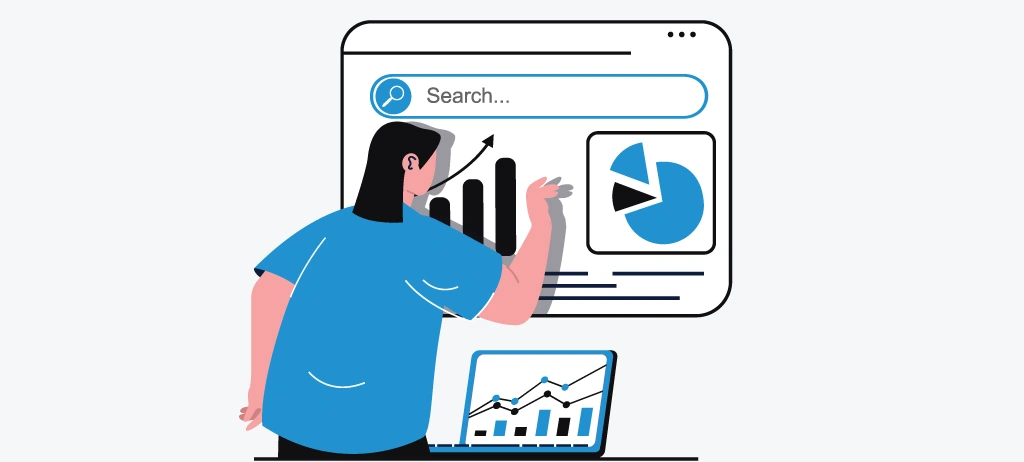
A reliable on-page SEO analysis starts with the right page and the right data. Reviewing your entire website at once may show broad performance trends, but it will not always explain why one article, landing page, or service page is not meeting user needs.
Page-specific data helps you connect search queries with the exact URL that appeared in Google Search. This makes it easier to understand:
- What people are searching for before visiting the page
- Which topics already bring impressions and clicks
- Which queries have weak click-through rates
- Which subjects may be missing or poorly explained
- Whether the page matches the search intent behind its queries
- Whether the problem is related to content, technical SEO, or another factor
This information creates a stronger foundation for content gap analysis. Instead of adding keywords based on assumptions, you can compare real search queries with the content already available on the page.
For example, suppose a WRanker blog post about a website SEO analysis tool receives impressions for queries related to technical SEO, internal linking, page speed, and indexing. These queries may reveal useful content opportunities. However, they do not automatically prove that the page needs four new sections. You must first check whether the page already covers those topics, whether the explanations are clear, and whether the queries match the page’s main purpose.
Before starting keyword clustering or search intent analysis, prepare the data in three stages:
- Select an existing page with a clear search purpose.
- Use consistent dates, countries, and device filters.
- Export the Google Search Console queries connected with that page.
Select an Existing Page with a Clear Search Purpose
Choose an existing page that has a clear topic and a defined purpose. This may be a blog article, service page, product page, landing page, glossary page, or SEO resource.
The page should answer a specific question, support a business goal, or help visitors complete an action. A clear purpose makes it easier to decide whether a query belongs to the page or points to a different type of content.
For example:
| Page type | Main purpose | Example query focus |
| Blog article | Explain a topic or answer a question | How to perform an SEO audit |
| Service page | Explain and promote a service | Technical SEO services |
| Tool page | Help users complete a task | Keyword density checker |
| Product page | Explain a product and support a purchase | SEO analysis software |
| Landing page | Encourage a specific action | Free website SEO analyzer |
| Resource page | Provide detailed reference information | On-page SEO checklist |
A page about a keyword density checker should mainly explain keyword frequency, repeated phrases, content balance, and practical content review. If it starts receiving queries about backlink monitoring or website indexing, those queries should be reviewed carefully. They may reveal a useful internal-linking opportunity, but they may not belong as major topics on the same page.
Choose a page with useful evidence
A suitable page may have one or more of the following characteristics:
- It receives impressions in Google Search Console.
- It ranks for several related queries.
- It receives impressions but has a low click-through rate.
- It receives clicks for topics that are only partly covered.
- It is an important page for leads, sales, sign-ups, or content discovery.
- It has recently been updated and needs a performance review.
- It has strong impressions but weak engagement after visitors arrive.
- It is an older page that may no longer match current search intent.
You do not need to choose only pages with high traffic. A page with low clicks but relevant impressions can also provide useful information. However, pages with very little data may require a longer reporting period before clear patterns appear.
Define the page’s purpose before checking queries
Before opening Google Search Console, record a few details about the selected URL:
- Main topic
- Primary keyword
- Intended audience
- Main search intent
- Main conversion or reader goal
- Important subtopics already covered
- Related pages that support the same topic
This short review creates a reference point for the analysis. It also helps prevent a common on-page SEO Mistake: changing a page to target every query it receives, even when those queries do not fit the page’s main purpose.
The goal is not to make one URL rank for every related search. The goal is to make the page more useful for the search intent it is best suited to serve.
Choose Comparable Dates, Countries, and Devices
Google Search Console data can change based on the selected date range, country, device, search type, and page filter. For this reason, use comparable settings when reviewing performance or measuring the effect of a content update.
A comparison is more useful when both periods cover the same number of days and use the same filters. Comparing the last 28 days with a previous 28-day period is usually more meaningful than comparing a short period with a much longer one.
Use the following settings consistently:
| Setting | Recommended approach | Why it matters |
| Date range | Compare equal periods, such as 28 days against the previous 28 days | Reduces misleading comparisons |
| Country | Use the same country or market | Search behavior and competition may differ by location |
| Device | Compare mobile with mobile and desktop with desktop | Query and performance patterns may vary by device |
| Search type | Keep the same search type, such as Web Search | Different search types may show different behavior |
| Page filter | Filter to the exact URL being reviewed | Keeps the analysis focused on one page |
| Search appearance | Keep relevant appearance filters consistent | Different result types may affect the data |
Why date ranges matter
Search demand may change because of:
- Seasonality
- Industry events
- Product launches
- Holidays
- Changes in customer interest
- Changes in search results
- Recent algorithm or website updates
- Changes in competitors’ content
For example, a blog post about a festival-related topic may receive more impressions during a particular season. A sudden increase in queries does not necessarily mean that the page was improved. It may reflect a temporary change in search demand.
Use complete reporting periods when possible. Avoid judging an update after only a few days because the available data may be too limited to show a reliable pattern.
Why country and device filters matter
A page may perform differently in different markets. Users searching for an SEO service in India may use different wording from users in the United States or the United Kingdom. Search results may also vary because of local competition, language, business needs, and search intent.
Device differences can also affect the analysis. Mobile users may search with shorter phrases, while desktop users may use more detailed queries. A page that performs well on desktop may still need better mobile content structure, readability, or page experience.
Do not assume that every change in clicks, impressions, CTR, or average position is caused by the page content. First check whether the reporting settings are comparable.
Export the Google Search Console Queries Associated with That Page
After selecting the page and setting the filters, open the performance report in Google Search Console. Apply a page filter for the exact URL you want to review.
The report provides several useful metrics:
- Clicks: The number of visits the page received from Google Search.
- Impressions: The number of times the page appeared in Google Search results.
- Click-through rate: The percentage of impressions that resulted in clicks.
- Average position: The average position recorded for the page’s search results.
These metrics provide context, but the Queries report is especially important for content gap analysis. It shows the search terms associated with the selected page during the chosen reporting period.
Open the Queries tab and export the available data as a spreadsheet or CSV file. A working file makes it easier to sort queries, group related terms, identify patterns, and document content decisions.
Keep the important query fields
Your exported file should contain the following information where available:
| Field | What it helps you understand |
| Query | The words or phrases people searched for |
| Clicks | Which queries generated visits |
| Impressions | Which queries gave the page search visibility |
| CTR | Which queries may need better relevance or search-result presentation? |
| Average position | The page’s general visibility for each query |
| Page | Which URL received the query data, especially when working with multiple pages? |
You can add a few working columns to support the next stages of the analysis:
| Added field | Purpose |
| Brand or non-brand | Separates searches that include your brand from broader topic searches |
| Query cluster | Groups queries with the same meaning or topic |
| Search intent | Records whether the query is informational, commercial, navigational, or transactional |
| Existing page section | Shows where the query is already addressed |
| Coverage status | Marks the query as covered, partly covered, unclear, or missing |
| Recommended action | Records whether to improve, expand, link, merge, or create content |
| Priority | Helps decide which opportunities should be handled first |
Do not treat every query as a content gap
Google Search Console shows the queries associated with a page, but it does not explain the complete reason behind each search. It also does not confirm that every query needs a new paragraph, heading, or page.
A query may appear because:
- The page already answers the question.
- The query is a close variation of the page’s main topic.
- Google tested the page for a related search.
- The page has a small amount of relevant information.
- The query reflects a different search intent.
- The page is receiving visibility for an unexpected topic.
- The searcher’s wording is broader than the page’s actual focus.
For this reason, use the exported data as evidence for further review, not as an automatic list of content changes.
The next step is to organize the queries through keyword clustering. By grouping queries according to meaning rather than shared words alone, you can identify the questions users are asking and compare those questions with the actual content on the page. This creates a more accurate foundation for SEO content gap analysis and helps you make focused updates instead of adding unnecessary keywords.
How To Use Keyword Clustering to Understand the Questions Behind Your Queries

Google Search Console gives you a list of queries connected to a page, but the list alone may not explain what users want. Different people may search for the same topic using different words, formats, or levels of detail.
Keyword clustering helps organize these queries into groups based on their meaning and purpose. Instead of reviewing every phrase separately, you can identify the main topics and questions connected to the page.
For example, a page about an SEO analysis tool may receive queries such as:
- Website SEO analysis tool
- Tool to analyze website SEO
- Check website SEO issues
- Website SEO checker online
- How to analyze website SEO
These queries are not identical, but several may belong to the same topic. Grouping them helps you understand whether the page covers the main need or whether important questions remain unanswered.
A useful clustering process includes three steps:
- Separate brand searches from relevant non-brand queries.
- Group related queries by meaning rather than shared words alone.
- Validate every cluster through search intent analysis.
Separate Brand Searches from Relevant Non-Brand Queries
The first step is to separate branded searches from non-branded searches. This helps you understand whether users are finding the page because they already know your brand or because they are searching for a general solution.
A branded query includes your company name, product name, tool name, or another identifiable brand term. A non-branded query describes a topic, problem, service, or task without mentioning your brand.
For example:
| Query | Query type | What it may indicate |
| WRanker SEO analyzer | Branded | The user already knows WRanker |
| WRanker keyword density checker | Branded | The user is looking for a specific WRanker tool |
| Website SEO analyzer | Non-branded | The user is exploring SEO analysis tools |
| how to check website SEO | Non-branded | The user needs information or guidance |
| free website SEO analyzer | Non-branded | The user may be comparing free tools |
Why this separation matters
Branded searches often show existing awareness, previous exposure, or navigational intent. Non-branded searches are usually more useful when you want to understand broader search demand and discover possible content gaps.
For example, if most of a page’s clicks come from branded queries, the page may be performing well with existing users but may have limited visibility for people who do not know the brand. This does not automatically mean the page needs more keywords. It means you should examine the non-branded query set separately.
Separating the two groups can help you:
- Understand how users discover the page.
- Identify broader topic-related searches.
- Avoid treating brand mentions as content opportunities.
- Review non-branded queries for missing explanations.
- Improve the page’s relevance for its intended audience.
- Distinguish navigational searches from informational or commercial searches.
Do not remove branded queries without reviewing them
Branded queries should not always be deleted from your analysis. They can reveal useful information about:
- Product or tool awareness
- Brand-specific questions
- Existing customer needs
- Navigation problems
- Queries that deserve dedicated support content
- Search terms that should be addressed through internal links
For the main content-gap review, keep branded and non-branded queries in separate groups. This gives you a clearer view of the page’s wider search visibility while preserving useful brand-related insights.
Group Keyword Variations by Meaning, Not Shared Words Alone
After separating brand searches, group the remaining queries according to their meaning. This is the central purpose of keyword clustering.
Queries that share a word do not always represent the same search intent. For example, the word “SEO” may appear in searches about technical issues, content writing, backlinks, page speed, keyword research, or website audits. Grouping all of them would create a broad and inaccurate cluster.
Instead, look at the complete query and ask:
- What topic is the user asking about?
- What problem are they trying to solve?
- What information or action do they need?
- Would the same page satisfy these searches?
- Do the queries require different levels of detail?
- Are the users at the same stage of the decision process?
Example of meaning-based keyword clustering
Suppose Google Search Console shows these queries for a page about on-page SEO:
| Query | Possible cluster | Reason |
| on-page SEO analysis | Page-level SEO analysis | Main topic of the page |
| Analyze on-page SEO | Page-level SEO analysis | Same basic task |
| On-page SEO checker | Page-level SEO analysis | Related tool-focused variation |
| On-page SEO checklist | On-page SEO process | User may want a step-by-step review |
| On-page SEO mistakes | On-page SEO problems | User wants to identify common issues |
| Content gap analysis | Content coverage | User wants to find missing topics |
| Keyword clustering | Query organization | User wants to group related searches |
These queries may be connected, but they should not automatically be placed in one large cluster. The first three may have a similar purpose, while the others may represent supporting topics or separate needs.
Use a practical clustering process
You can organize queries using the following method:
- Read the complete query. Do not focus only on one repeated word.
- Identify the main subject. Determine what the query is actually about.
- Identify the required action. Is the user trying to learn, compare, check, fix, buy, or navigate?
- Group close variations. Combine queries that could be answered by the same section or page.
- Separate different needs. Create a new cluster when the question, audience, or expected answer changes.
- Review the cluster as a whole. Give each group a clear topic name that describes its meaning.
Useful cluster names may include:
- Understanding on-page SEO analysis
- Finding content gaps
- Improving page headings
- Checking metadata
- Reviewing internal links
- Fixing technical SEO issues
- Choosing an SEO analysis tool
Avoid clustering by exact wording
Keyword clustering should not be based only on:
- Shared words
- Similar word order
- Singular and plural forms
- Minor spelling differences
- The presence of the same main keyword
For example, “SEO website analyzer” and “technical SEO audit tool” both contain SEO-related language, but they may represent different needs. One user may want a general website review, while the other may want a technical diagnosis focused on crawlability, indexing, redirects, or performance.
Similarly, “how to improve website SEO” and “best website SEO analysis tool” should not automatically belong to the same cluster. The first is mainly informational, while the second may involve commercial investigation.
A useful rule is:
Put queries in the same cluster only when one well-focused page or section could satisfy the main need behind all of them.
You can use a spreadsheet to record the query, cluster name, search intent, current page section, coverage status, and recommended action. This makes the analysis easier to review and supports a more consistent SEO content gap analysis.
Validate Each Cluster with Search Intent Analysis
Keyword clusters are only useful when they represent a real search need. After grouping the queries, validate each cluster through search intent analysis.
Search intent is the reason behind a search. It explains what the user expects to find and what type of result would satisfy the query.
Common intent categories include:
| Search intent | What the user wants | Example |
| Informational | Learn or understand something | What is on-page SEO analysis? |
| Commercial investigation | Compare options before deciding | Best website SEO analysis tool |
| Transactional | Complete an action or use a service | Free website SEO analyzer |
| Navigational | Find a specific website, brand, or page | WRanker SEO tools |
Some queries may show mixed intent. For example, “free website SEO analyzer” may indicate that the user wants to learn about SEO analysis while also looking for a tool they can use immediately.
Ask whether the live page satisfies the cluster
For each cluster, compare the expected answer with the actual page. Consider the following questions:
- Does the page clearly address the main topic?
- Does the page answer the question early enough?
- Is the explanation suitable for the user’s level of knowledge?
- Does the page provide the type of content the query suggests?
- Are examples, steps, comparisons, or tools needed?
- Does the page guide the reader toward a useful next action?
- Is another page on the website a better match?
For example, if a cluster contains “how to find content gaps,” a short mention of content gaps may not be enough. The page may need a clear process, examples, and guidance on how to evaluate the findings. On the other hand, if the cluster contains a query about a specific WRanker tool, an internal link to the relevant tool page may be more suitable than adding a long explanation to the current article.
Distinguish related intent from identical intent
Two queries can be closely related without requiring the same content.
For example:
- “What is keyword clustering?” asks for a definition.
- “How to use keyword clustering for SEO?” asks for a process.
- “Keyword clustering tool” may indicate a need for software.
- “Keyword clustering examples” suggests that the user wants practical demonstrations.
These queries may belong to the same broad topic, but the page should address the specific needs represented by the cluster. If the intent is substantially different, consider a separate section, a relevant internal link, or a new page.
Use search results as an additional validation signal
Google Search Console data should be combined with a review of the actual search results when needed. Examine the types of pages that appear for the query cluster:
- Detailed guides
- Tool pages
- Service pages
- Product pages
- Comparison articles
- Checklists
- Tutorials
- Definitions or short answers
This review can help confirm whether the cluster is informational, commercial, transactional, or mixed. It can also show whether the existing page format is suitable for the query.
However, search-result patterns should not be copied. Use them to understand the user’s expected answer format, then create original content based on your own expertise, evidence, examples, and audience needs.
Record the final decision for every cluster
After reviewing the query meaning and search intent, assign a clear status to each cluster:
- Covered: The page answers the cluster well.
- Partly covered: The page addresses the topic but needs more detail or clarity.
- Unclear: The page mentions the topic, but the answer is difficult to find or understand.
- Missing: The page does not address the main need.
- Misaligned: The query belongs to another page or search intent.
- Internal-link opportunity: Another relevant URL should provide the answer.
This final classification prevents unnecessary content changes. It also helps you decide whether to improve the current page, strengthen internal linking, or create a separate resource.
The purpose of keyword clustering is not to collect as many related phrases as possible. It is to understand the questions behind the queries and connect each group with the most suitable content. When combined with search intent analysis, it provides a stronger foundation for identifying genuine content gaps during an on-page SEO Analysis.
How to Find Content Gaps by Matching Query Clusters to the Live Page

After grouping Google Search Console queries into meaningful clusters, the next step is to compare those clusters with the actual content on the page. This is where on-page SEO analysis moves from data collection to practical review.
A query cluster may show that users are interested in a topic, but the data does not confirm whether the page has a real content gap. You need to open the live URL, review its structure, and check whether the page answers the questions represented by each cluster.
For example, a page about a website SEO analysis tool may receive impressions for queries about technical checks, internal links, metadata, and page performance. The page may already cover some of these subjects in detail, mention others briefly, and miss a few completely. Each situation requires a different action.
A useful comparison should answer three questions:
- Where does the page address the query cluster?
- How well does the existing content answer the user’s need?
- Is the issue actually a content gap, or is another factor affecting performance?
Locate the Passage That Answers Each Query Cluster
Start by opening the live page and reviewing its main content. Do not rely only on the page title, headings, or keyword frequency. Read the relevant sections as a user would and look for the actual answer to each query cluster.
For every cluster, identify the section, paragraph, example, table, checklist, or tool recommendation that addresses the topic.
A simple review table can help:
| Query cluster | What the user may want | Existing page location | Initial finding |
| Website SEO analysis process | Clear steps for analyzing a website | “How the tool works” section | Covered or partly covered |
| Technical SEO checks | Information about crawlability and indexing | Technical SEO section | Review depth and accuracy |
| On-page SEO mistakes | Common page-level problems and fixes | On-page checklist | Check whether examples are included |
| SEO analysis tool | A tool for reviewing website issues | Tool introduction or CTA | Check whether the tool is clearly explained |
| Website SEO score | Meaning and use of an SEO score | Score explanation section | Check whether limitations are explained |
The aim is to map each cluster to the most relevant part of the page. This prevents a common mistake: assuming that a topic is missing simply because the exact query does not appear in the text.
Search for concepts, not only exact keywords
A page may answer a query without using the same wording. For example, the query “how to check website SEO” may be addressed by a section titled “Review Your Website’s Main SEO Issues.” The wording differs, but the underlying need may already be covered.
When reviewing the page, look for:
- Direct answers to the main question
- Related terms and concepts
- Relevant examples
- Step-by-step instructions
- Explanations of important terms
- Tables, checklists, or comparisons
- Internal links to supporting resources
- Clear next steps for the reader
You can use the browser’s find function to locate important terms, but do not depend on exact-match searches alone. Semantic coverage matters more than repeating the same phrase.
Review the beginning of the page first
Important answers should be reasonably easy to find. If a page receives queries about a specific topic but only addresses that topic near the end, the content may be difficult for users to discover.
Check whether the page:
- Introduces the main topic clearly
- Uses descriptive headings
- Places important information near the relevant section
- Explains unfamiliar terms before using them
- Avoids hiding essential answers in vague paragraphs
- Connects related sections with useful internal links
This review is not about forcing every answer into the introduction. It is about making the page’s structure clear enough for readers and search engines to understand.
Distinguish Missing Answers from Partial or Unclear Coverage
Not every content weakness is a completely missing topic. A page may mention a subject but fail to explain it well enough. It may also answer the general question while leaving out a specific detail that users need.
For accurate SEO content gap analysis, classify the level of coverage before deciding what to change.
| Coverage status | Meaning | Recommended action |
| Fully covered | The page answers the cluster clearly and accurately | Keep it; improve only if needed |
| Partly covered | The topic is present but lacks important details | Expand the relevant section |
| Unclear coverage | The answer exists but is difficult to find or understand | Improve structure, wording, or headings |
| Missing | The page does not address the main user need | Add suitable content or link to another resource |
| Misaligned | The query does not match the page’s main purpose | Consider an internal link or another URL |
| Outdated | The page contains incomplete or old information | Review and update the content |
1. Fully covered content
A cluster is fully covered when the page provides a useful answer that matches the query’s search intent. The answer should be clear, accurate, and suitable for the intended reader.
For example, if a query cluster concerns “what is an SEO score,” the page may already define the term, explain how tools calculate it, and clarify that it is not a Google ranking factor. In that case, adding the phrase repeatedly may provide little value.
2. Partly covered content
Partial coverage occurs when the page addresses the topic but leaves out information needed to understand or act on it.
For example, a page may explain that internal links are important but fail to discuss:
- How to identify important pages with few internal links
- How to choose relevant anchor text
- How to connect related articles
- How internal links support discovery and navigation
- When an internal link is more useful than adding new content
The correct response may be to expand the existing section with practical guidance rather than create a separate article.
3. Unclear coverage
A page may contain the right information but present it in a way that makes the answer difficult to locate. This can happen when:
- The heading does not describe the actual topic.
- Several unrelated ideas are combined in one paragraph.
- The answer appears after unnecessary background information.
- The wording is too general.
- The page uses technical terms without explanation.
- The content lacks examples or clear steps.
In this situation, the gap may be related to content organization rather than missing information. Improving the heading structure, adding a short direct answer, or separating topics into smaller sections may solve the problem.
4. Missing content
A topic is more likely to be a genuine content gap when the page does not answer the main question at all, and the query is relevant to the page’s purpose.
Before adding content, confirm that:
- The query is relevant to the page’s audience.
- The search intent fits the page.
- The topic supports the page’s main purpose.
- The information would help readers make a decision or complete a task.
- The topic is not already covered better on another URL.
A missing topic does not always require a long section. Sometimes a concise explanation and a relevant internal link are enough.
Avoid using word count as the main measure
A longer page is not automatically more complete. Content coverage should be judged by usefulness, accuracy, clarity, and relevance, not by the number of words added.
A short explanation may fully answer a simple query. A complex query may need examples, steps, evidence, or a comparison. The right amount of content depends on the user’s question and the page’s purpose.
Separate Content Gaps from Other Reasons a Page Underperforms
A page can receive low clicks, weak rankings, or limited conversions for reasons that are not related to missing content. During an on-page SEO analysis, separate content problems from technical, search-result, and user-experience issues.
This distinction prevents unnecessary rewriting and helps you choose the correct next step.
| Possible issue | What it may look like | What to review |
| Content gap | The page does not answer a relevant question | Topic coverage and search intent |
| Weak search-result presentation | High impressions but low CTR | Title tag, meta description, and relevance |
| Technical SEO problem | The important page is not crawled or indexed properly | Robots directives, indexing, canonicals, and status codes |
| Poor page structure | Users cannot find answers easily | Headings, sections, navigation, and internal links |
| Slow or difficult experience | Visitors struggle to use the page | Mobile usability, performance, and layout |
| Wrong search intent | The page type does not match the query | Search-result formats and user expectations |
| Low search demand | Few people search for the topic | Query volume patterns and seasonality |
| Strong competition | Other pages provide better or more relevant answers | Search-result quality and topic coverage |
| Weak conversion path | Visitors arrive but do not take action | CTA clarity, trust signals, and page usability |
Check search intent before rewriting
A page may rank for a query that is related to its topic but still fail to satisfy the user. For example, a service page may appear for an informational query asking, "What is technical SEO?" while the searcher expects a detailed educational guide.
Adding more sales copy to that service page may not solve the problem. The better action may be to link to an educational article or create a separate resource that matches the informational intent.
Check technical signals
If an important page has indexing or crawlability problems, improving its content may not produce the expected result. Review the relevant technical signals, such as:
- Indexing status
- noindex directives
- Robots.txt restrictions
- Canonical URLs
- Redirects
- HTTP status codes
- XML sitemap inclusion
- Internal links
- JavaScript-rendered content
A broader technical SEO analysis or website SEO audit can help identify these issues. Tools such as an SEO website analyzer may also provide useful diagnostic findings, but automated results should be reviewed before making changes.
Check titles, descriptions, and click-through rate
High impressions with low CTR may indicate that the page is visible but does not present a strong or relevant search-result message. The problem may involve the title tag, meta description, search intent, competition, or the type of result displayed.
Review whether the title and description:
- Clearly explain what the page offers
- Match the main search intent
- Set accurate expectations
- Use the primary topic naturally
- Give users a reason to choose the result
- Avoid exaggerated or misleading claims
Do not assume that changing the title alone will solve every low-CTR problem. Review the query, ranking position, competing results, and page relevance together.
Check internal linking and page relationships
A page may appear to have a content gap when the needed information already exists elsewhere on the website. For example, an article may briefly mention backlink monitoring tools but not need a full section explaining backlink monitoring. A relevant internal link may provide a better experience.
Review whether:
- The page links to closely related resources.
- Anchor text explains what the linked page covers.
- Important supporting pages are easy to reach.
- Similar articles compete for the same search intent.
- The page has a clear role within the website’s topic structure.
This approach supports better site architecture and reduces the risk of creating several pages that answer the same question.
Check business and user outcomes
Search visibility is important, but it is not the only measure of page quality. A page may receive clicks without generating qualified visits, leads, sign-ups, or other useful actions.
Review:
- Engagement with the page
- Relevant conversions
- Contact or sign-up actions
- Tool usage
- Navigation to related resources
- Feedback from sales, support, or content teams
- Evidence from real users or subject-matter experts
These signals help you decide whether a content change is likely to solve a meaningful problem.
The purpose of matching query clusters to the live page is to identify the exact type of improvement needed. Some clusters reveal missing information, while others point to unclear structure, weak search-result messaging, technical problems, or a better internal-linking destination. By separating these causes, you can make focused updates and avoid changing content simply because a query appeared in Google Search Console.
How to Decide Whether to Improve This Page, Link Elsewhere, or Create New Content

Finding a possible content gap is only the first part of the process. The next step is deciding what action will best serve the reader and support the page’s purpose.
A query may show an opportunity to add information, but adding more content is not always the right solution. The topic may already be covered on the page, another URL may answer it more effectively, or the query may represent a completely different search intent.
Use the following decision process:
- Improve the existing page when the query fits its main topic and purpose.
- Link to another URL when the information already exists elsewhere or belongs to a related resource.
- Create a new page when the topic has a distinct audience, search intent, or information need.
This approach makes content gap analysis more useful. It also reduces unnecessary updates, duplicate content, keyword cannibalization, and pages that try to cover too many unrelated subjects.
Expand the Existing Page When the Search Intent Fits
Improve the current page when the query cluster closely matches its main topic and the existing content does not fully answer the user’s question.
For example, an article about on-page SEO analysis may receive relevant queries about:
- Reviewing title tags and meta descriptions
- Checking heading structure
- Finding missing content sections
- Improving internal links
- Matching content with search intent
- Using Google Search Console to identify query patterns
These topics may fit naturally into the same article because they support the page’s main purpose.
Before expanding the page, check whether the new information will help the same audience complete the same task. If the answer is yes, improving the existing page is often more useful than creating another article.
Signs that the existing page should be expanded
Consider updating the page when:
- The query cluster matches the page’s main search intent.
- The page mentions the topic but does not explain it clearly.
- The existing section lacks examples or practical steps.
- The answer is too general for the user’s question.
- The topic is important to the page’s audience.
- The missing information can be added without changing the page’s main purpose.
- The update will improve clarity, usefulness, or task completion.
A useful update may include:
- Adding a short direct answer
- Expanding an existing explanation
- Adding a relevant H2 or H3
- Including a practical example
- Adding a comparison table
- Creating a checklist
- Improving the order of information
- Adding relevant internal links
- Updating outdated facts or examples
- Clarifying technical terms
Example: expanding an existing SEO article
Suppose a page explains how to perform an SEO content gap analysis, but it does not explain how to group Google Search Console queries. If the page’s main purpose already includes finding content gaps, adding a section about keyword clustering may be appropriate.
The new section should explain how to:
- Export queries for the selected page.
- Separate branded and non-branded searches.
- Group queries by meaning.
- Review the search intent behind each group.
- Compare the groups with the content on the live page.
The update should add useful information rather than repeat the same keyword several times.
Keep the page’s main purpose clear
Do not expand a page simply because a related keyword has impressions. Every addition should support the main topic and reader journey.
For example, a page about an on-page SEO checker may briefly mention technical SEO. That does not mean it needs a full guide to crawlability, XML sitemaps, redirects, or indexing. If those subjects require detailed treatment, the page may be better served by a concise explanation and an internal link to a dedicated technical SEO analysis resource.
Check Whether Another URL Already Answers the Question
Before adding new content, review the website’s existing pages. The information may already be available in another article, tool page, service page, or resource.
This step is important because creating a new section or article for an already covered topic can lead to:
- Duplicate explanations
- Repeated search intent
- Keyword cannibalization
- Confusing internal links
- More pages to maintain
- A weaker website topic structure
Use a site search, content inventory, internal-link report, or website SEO audit to find related URLs. You can also review the website’s sitemap and existing category structure.
Compare the query with existing URLs
Create a simple comparison before deciding what to do:
| Question | What to review |
| Is the topic already covered? | Search existing articles, tools, and resource pages |
| Does another URL match the intent better? | Compare the page type and expected answer |
| Is the existing page accurate and useful? | Review its depth, clarity, and freshness |
| Can the current page guide users there? | Add a relevant contextual internal link |
| Are two pages targeting the same intent? | Check for overlap and possible cannibalization |
| Is the other page difficult to find? | Improve internal linking and navigation |
Use an internal link when another page is the better answer
An internal link is often the right choice when the current page only needs to introduce a topic briefly.
For example:
- An article about keyword usage can link to a Keyword Density Checker.
- A page about content gaps can link to a detailed keyword research in SEO guide.
- A general SEO article can link to a dedicated technical SEO analysis resource.
- A discussion of backlinks can link to relevant backlink monitoring tools.
- A page about image optimization can link to an image alt tag checker.
The link should appear where it helps the reader. Use descriptive anchor text that explains the destination instead of vague phrases such as “click here.”
Review whether the existing page needs improvement first
Sometimes another URL technically covers the topic but does not provide a useful answer. In that case, simply adding a link may not be enough.
Review whether the destination page:
- Matches the query’s search intent
- Provides accurate and current information
- Has a clear title and heading structure
- Explains the topic at the right level
- Is accessible through relevant internal links
- Supports the reader’s next step
If the destination page is weak, improve it before directing more users there. A strong internal-linking system depends on useful destination pages, not just a high number of links.
Create a New Page Only for a Distinct Reader Need
Create a new page when the query cluster represents a clear topic or search intent that the existing page should not fully cover.
A separate page may be appropriate when:
- The topic has a different main purpose.
- The audience has a different level of knowledge.
- The query requires a different content format.
- The subject needs a detailed explanation.
- The topic supports a separate business or conversion goal.
- The existing page would become too broad or difficult to navigate.
- Another page would provide a clearer and more complete answer.
For example, an article about finding content gaps with Google Search Console may mention technical indexing issues, but a complete guide to technical SEO analysis should probably exist as a separate resource. The two topics are related, but their main purposes are different.
Examples of distinct reader needs
| Existing page topic | New query need | Possible action |
| On-page SEO analysis | How to fix crawlability and indexing problems | Create or link to a technical SEO resource. |
| Keyword density | How to monitor referring domains and backlink changes | Link to Backlink Monitoring Tools content |
| Website SEO score | How to perform a full technical website audit | Link to or create a website SEO audit guide. |
| Content gap analysis | How to build a complete keyword research process | Link to a keyword research resource. |
| SEO tool comparison | How to use one specific tool step by step | Create a focused tool guide if the need is substantial. |
Confirm the new page has a clear purpose
Before creating a new URL, define:
- The main question it will answer
- The intended audience
- The primary search intent
- The main keyphrase
- The supporting topics
- The page type
- The main action or next step
- The internal links it should receive
- The existing pages it must not duplicate
This planning helps prevent thin pages and overlapping articles. It also supports stronger topical organization and makes future on-page SEO analysis easier.
Avoid creating a page for every query variation
A separate page is not necessary for every keyword variation. Several queries may have the same meaning and can be answered by one well-organized resource.
For example, these queries may represent one core need:
- How to find content gaps
- Content gap analysis process
- How to identify missing topics
- Find missing keywords for a webpage
Creating four separate pages for these variations may create unnecessary overlap. A single useful guide with clear sections, examples, and internal links may serve the same audience more effectively.
Create a new page only when the topic deserves its own resource because the reader’s question, intent, audience, or required answer is meaningfully different.
The best decision is not always to add more text. A strong content strategy connects each query cluster with the most suitable destination. By improving the current page when the intent fits, linking to existing resources when appropriate, and creating new content only for distinct needs, you can build a clearer website structure and make your content gap analysis more focused and effective.
Build a Prioritised Content Update Plan from the Evidence

Finding a content gap is only the first step. Next, decide which improvements to make first, what each update should achieve, and how you'll measure success. Without a clear plan, content teams may add too many keywords, create unnecessary pages, or spend time improving sections that have little effect on the page’s usefulness.
A prioritised content update plan should connect each proposed change to evidence from Google Search Console, keyword clustering, search intent analysis, and the live page. It should also consider the page's importance, the effort required, and the potential impact on users and business goals.
Start with the Evidence, Not with a List of Keywords
Do not begin by adding every query that appears in Google Search Console. First, review what each query cluster tells you about the page.
For every potential content gap, ask:
- Does the query represent a relevant topic for this page?
- Does the query match the page’s existing search intent?
- Is the topic already covered clearly?
- Is the answer present but difficult to find?
- Would a stronger explanation help the reader?
- Does the query belong on another existing page?
- Would it require a completely different page?
This process prevents keyword-focused updates that make the content longer without making it more useful.
| Evidence from the analysis | Possible interpretation | Recommended action |
| A relevant query is not addressed anywhere on the page | The page may have a genuine content gap | Add a useful section or explanation if the intent fits |
| A query is mentioned but not explained clearly | The page has partial coverage | Expand, simplify, or reorganize the existing passage |
| A query has a different search intent | The page may not be the right destination | Link to a more relevant page or create a separate page |
| Several queries express the same need | The page may need one stronger topic section | Consolidate them into one useful section |
| A query is unrelated to the page’s purpose | The query may be incidental or misleading | Do not force it into the content |
| The page answers the query but receives few clicks | The issue may involve title, snippet, ranking, competition, or intent alignment | Investigate before changing the main content |
Classify Each Proposed Update
A practical way to organize findings is to classify every proposed change into one of five update types:
- Expand: Add missing information to an existing section.
- Clarify: Rewrite an unclear, incomplete, or confusing explanation.
- Reorganize: Move or restructure information so readers can find it more easily.
- Connect: Add relevant internal links to related pages or supporting resources.
- Create: Publish a new page only when the topic represents a distinct search need.
For example, an article about a website SEO audit may receive impressions for queries about internal linking. If the article already explains internal links but does not provide practical steps, the correct action may be to expand that section. If the page only mentions internal linking and another dedicated article already covers the topic in detail, an internal link may be more appropriate than a long new section.
Rank Updates by Impact, Relevance, and Effort
Not every content gap deserves immediate attention. Prioritise updates using three main factors:
- Impact: How much could the change improve usefulness, clarity, qualified traffic, or conversions?
- Relevance: How closely does the topic match the page’s purpose and target audience?
- Effort: How much time and work will the update require?
A high-priority update is usually highly relevant, useful to the reader, and reasonably achievable. A low-priority update may involve a minor wording change, an unrelated query, or a topic with little connection to the page’s goal.
You can use a simple scoring model to support consistent decisions:
| Factor | Low score | High score |
| Relevance | Weak connection to the page | Directly supports the page’s purpose |
| Potential impact | Minor improvement | Could resolve an important user need |
| Evidence strength | Based on one unclear signal | Supported by query clusters and page review |
| Business value | Little connection to the website goal | Supports qualified visits or conversions |
| Effort | Requires substantial work | Can be completed efficiently |
The score should support judgement rather than replace it. A small technical or content correction may deserve priority if it affects an important landing page, while a larger update may be postponed if its value is uncertain.
Create an Evidence-Based Update Plan
Record each proposed change in a working table before editing the page. This makes the reasoning behind every update clear and helps writers, SEO specialists, and developers work from the same information.
| Query cluster or topic | Evidence | Current page condition | Recommended update | Priority | Success measure |
| Technical SEO checks | Relevant impressions for technical SEO queries | Topic is only briefly mentioned | Expand the explanation with practical examples | High | Better engagement and stronger query coverage |
| Internal linking | Several related queries and weak supporting links | Section lacks useful navigation | Add relevant internal links and descriptive anchors | High | Improved navigation and qualified page visits |
| Website SEO score | Queries show interest in score interpretation | Page explains the score but lacks context | Add a short explanation of what the score can and cannot show | Medium | More complete topic coverage |
| A separate tool-related topic | Query has a different search purpose | Existing page is not the best answer | Link to a dedicated tool or supporting article | Medium | More relevant internal navigation |
| Unrelated query | Weak topical connection | No meaningful coverage needed | Leave the content unchanged | Low | Avoid unnecessary keyword expansion |
The evidence column should contain the actual reason for the proposed change. This might include a query cluster, a Search Console pattern, a passage from the live page, a search intent observation, or a finding from an SEO review. Avoid writing vague notes such as “add more keywords” or “improve SEO.”
Set a Clear Purpose for Every Content Change
Each update should have a specific purpose. For example:
- Explain a topic that readers currently cannot understand.
- Answer a common question more directly.
- Improve the order of information on the page.
- Make an existing answer easier to find.
- Remove outdated or unnecessary content.
- Connect readers to a more relevant supporting page.
- Improve the page’s alignment with its intended search intent.
- Support a meaningful conversion or next step.
A useful update brief might look like this:
Update: Expand the internal linking section. Evidence: The page receives impressions for internal linking-related queries, but the current section only defines the concept. Purpose: Explain how internal links support discovery and navigation, then guide readers to a relevant internal linking resource. Action: Add practical guidance, one example, and a relevant internal link. Success measure: Review changes in query coverage, engagement, and qualified visits after the page has been published and reprocessed.
This level of detail helps prevent unfocused editing.
Improve the Existing Page Before Creating More Content
A content gap does not automatically justify a new article. Creating a new URL can introduce additional work, including content production, internal linking, optimization, maintenance, and search intent validation.
Before creating a new page, check whether the existing page can satisfy the need through:
- A clearer explanation.
- A new subsection.
- A practical example.
- A comparison table.
- A short checklist.
- A relevant internal link.
- A revised heading structure.
- Updated or removed information.
- Better placement of an existing answer.
Create a separate page only when the topic has a distinct purpose, audience, or search intent that would make the existing page too broad or difficult to use.
For example, a page explaining on-page SEO analysis may briefly mention technical SEO. It does not need to become a complete technical SEO guide. If readers need a detailed explanation of crawlability, indexability, and rendering, the better solution may be to link to a dedicated Technical SEO Analysis article.
Protect the Page’s Original Search Purpose
During the update, keep the page’s primary purpose visible. Content-gap work can easily cause a page to become too broad, especially when many related queries appear in Search Console.
Before approving a change, confirm that:
- The main heading still describes the page accurately.
- The introduction still sets the correct expectation.
- New sections support the central topic.
- Related keywords are used naturally.
- The content does not repeat another article on the website.
- Supporting information is placed where readers need it.
- Internal links guide users to deeper resources without distracting from the main answer.
- The page still leads readers toward its intended next step.
The goal is not to make one page answer every possible query. The goal is to make the page the best practical answer for its intended topic while using internal links and a clear site structure to support related needs.
Define the Order of Implementation
A useful implementation order is:
- Fix important relevance problems. Make sure the page clearly addresses its intended audience and search purpose.
- Improve missing or weak answers. Expand important content gaps and clarify partial coverage.
- Reorganize the page. Improve headings, content order, examples, and scannability.
- Add relevant internal links. Connect the page to supporting articles, tools, and related resources.
- Update outdated or inaccurate information. Review claims, examples, screenshots, dates, and recommendations.
- Review titles and descriptions. Ensure the metadata accurately reflects the updated page and its main benefit.
- Run supporting SEO checks. Use an on-page SEO checker, SEO website analyzer, or broader website SEO audit to identify technical or structural issues that may affect the page.
- Publish and document the changes. Record what changed, why it changed, and when the update was published.
This order keeps content quality and user intent ahead of minor keyword or formatting adjustments.
Measure the Results Without Expecting Immediate Changes
After publishing the update, allow enough time for Google to recrawl and reprocess the page before concluding. Avoid judging the update from a few days of data or from one isolated keyword.
Compare the same reporting conditions used during the original analysis:
- The same page URL.
- Comparable date ranges.
- The same country or search region.
- The same device category.
- Similar query clusters.
- Clicks and impressions.
- Click-through rate.
- Average position.
- Qualified visits and meaningful actions.
Also review qualitative signals. A page may become more useful even if its average position changes very little. Readers may find answers faster, navigate to related resources, or complete a desired action more often.
A strong content update plan therefore measures more than keyword visibility. It evaluates whether the page is clearer, more complete, more relevant, and more useful to the people it is intended to serve.
How to Validate the Published Update and Measure What Changes
Publishing an updated page does not automatically prove that the content gap has been resolved. After the changes go live, you need to confirm that the page is technically accessible, that the updated content is present, and that users are finding a more relevant answer.
Validation should combine three types of evidence:
- Page-level checks to confirm that the update was implemented correctly.
- Search performance data to understand how query clusters change.
- Business and engagement data to determine whether the update attracts useful visitors and supports meaningful actions.
This process helps separate real improvements from normal search fluctuations.
Recheck the page with Wranker’s Free Website SEO Analyzer
Start by checking the published URL with Wranker’s Free Website SEO Analyzer. This confirms whether the updated page contains the expected on-page elements and whether any technical or structural issues may interfere with the user experience.
Run the analysis after the revised page is live and accessible. If the page has not yet been published, or if the tool cannot access the URL, the results may not represent the final version.
Review the following areas:
| Area to review | What to check | Why it matters |
| Title tag | The title reflects the page’s actual topic and main search purpose | Helps set an accurate expectation in search results |
| Meta description | The description explains the page’s value without misleading claims | Supports clearer search-result messaging |
| Heading structure | New sections use logical headings and fit the existing page hierarchy | Makes the updated content easier to scan and understand |
| Content coverage | The new explanations, examples, and answers are visible on the live page | Confirms that the intended content gap was actually addressed |
| Keyword relevance | Important query themes appear naturally in useful sections | Helps maintain topical alignment without keyword stuffing |
| Internal links | Relevant supporting pages and tools are linked where appropriate | Helps users and search engines discover related resources |
| Images and media | Images have suitable alt attributes and do not create unnecessary page weight | Supports accessibility and page usability |
| Canonical and indexing signals | The page has the intended canonical and indexability settings | Reduces the risk of search engines processing the wrong URL |
| Mobile presentation | The updated sections work properly on smaller screens | Ensures the content remains usable across devices |
The analyzer can help identify implementation issues, but automated checks cannot fully judge whether the new content is accurate, useful, or aligned with search intent. Read the updated page manually and confirm that it answers the intended question clearly.
If the update includes a new section, comparison table, internal link, or call to action, verify each item directly on the live page. A change recorded in a content brief is not complete until it appears correctly in the published version.
Compare the Same Query Clusters Across Complete Reporting Periods
Use Google Search Console to compare performance before and after the update. The most reliable comparison uses complete, comparable reporting periods rather than isolated days immediately after publication.
For example, you might compare:
- The four full weeks before the update.
- The four full weeks after Google has had time to recrawl and process the page.
- The same page URL in both periods.
- The same country and device filters.
- The same query clusters created during the original analysis.
Avoid changing several filters between reports. If the first report includes mobile and desktop data from all countries, but the second report only includes desktop data from one country, the results will not provide a reliable comparison.
Focus on the query cluster, not only on individual keywords. Search terms often vary in wording while expressing the same underlying need. A cluster-based review can show whether the page is becoming more relevant to a topic even when individual queries move in different directions.
| Metric | What to compare | What it may indicate |
| Impressions | Visibility for the same query cluster | Whether the page is appearing for more relevant searches |
| Clicks | Visits from the same query cluster | Whether search visibility is producing more traffic |
| Click-through rate | Clicks compared with impressions | Whether the search result appears relevant and appealing |
| Average position | Position for the same cluster | Whether the page’s reported visibility has changed |
| Query coverage | Number and type of relevant queries | Whether the page is appearing for a broader or more suitable set of searches |
| Landing-page performance | Results for the exact updated URL | Whether the change is affecting the intended page |
A rise in impressions does not always mean the update was successful. Impressions may increase because the page appears for broader or less relevant searches. Similarly, a lower average position may not be meaningful if the page has started appearing for many new queries.
Review the actual queries behind the numbers. Ask whether the new searches are relevant to the page, whether the page answers them, and whether the change supports the original content goal.
Also remember that Google Search Console data can fluctuate because of seasonality, competition, algorithm changes, search demand, and other factors. A change in performance should not automatically be attributed to one content update.
Review Qualified Visits and Actions Alongside Search Visibility
Search visibility is useful, but traffic alone does not show whether the update helped the website achieve its purpose. A page may receive more clicks without attracting the right audience or supporting meaningful actions.
Review search performance alongside relevant website analytics and conversion data. Depending on the page’s purpose, useful actions may include:
- Visiting another relevant article.
- Using an SEO tool.
- Downloading a resource.
- Submitting a contact form.
- Requesting a consultation.
- Starting a free trial.
- Completing a purchase.
- Spending time with the content before continuing to another page.
- Returning to the website for a related task.
The right measurement depends on the page’s role. An informational blog article may be successful when it helps readers reach a related guide or tool. A landing page may need to generate sign-ups, inquiries, or purchases. Do not judge every page using the same conversion target.
| Page purpose | Useful supporting measures |
| Informational article | Engaged visits, relevant query clicks, scroll depth, internal-link clicks |
| SEO tool page | Tool starts, completed checks, repeat usage, related tool visits |
| Service page | Qualified enquiries, contact-form submissions, consultation requests |
| Product or commercial page | Product interactions, sign-ups, purchases, assisted conversions |
| Supporting resource | Clicks to related pages, downloads, return visits, task completion |
A useful evaluation asks three questions:
- Did the page become more relevant to the intended query clusters?
- Did visitors engage with the updated content or continue to useful next steps?
- Did the update support the page’s broader purpose?
For example, an article may show only a small increase in clicks but a stronger rate of visitors moving to a relevant Wranker tool. That may be a meaningful improvement if the article’s purpose is to help readers identify and resolve SEO issues.
Avoid relying on one metric in isolation. Higher traffic with fewer qualified actions may indicate weaker relevance, while stable traffic with better engagement may show that the update improved the experience for the right audience.
Finally, document the results in the same update record used during planning. Record the publication date, updated sections, query clusters reviewed, reporting periods, technical validation findings, and business outcomes. This creates a repeatable process for future on-page SEO analysis and helps the team understand which types of content updates produce useful results over time.
Conclusion
On-page SEO analysis helps identify content gaps by connecting Google Search Console data with keyword clustering, search intent, and a review of the live page. Use the evidence to improve, reorganize, or connect existing content before creating new pages. After publishing, validate the update with Wranker’s Free Website SEO Analyzer and measure search visibility alongside qualified visits and meaningful actions.
Frequently Asked Questions
How can Google Search Console help find content gaps?
What is a content gap in SEO?
How do I perform a content gap analysis using Google Search Console?
What is keyword clustering, and why is it important for on-page SEO analysis?
How do I know whether a query is a real content gap?
Should I update an existing page or create a new page for a content gap?
How can I prioritize content gaps for an SEO content update?
How can I validate an updated page after fixing content gaps?
How do I measure whether an on-page SEO update was successful?
What is on-page SEO analysis?
More Related Blogs: